


B2B Website Modernization: Drive More Leads & Sales

Phurvishaa specializes in crafting travel tech and marketing content, leveraging deep research, SEO expertise, and AI-driven insights. Her strategic approach ensures content that educates, engages and delivers knowledge.

Our authors are proven experts in their fields, writing on topics where they have demonstrated expertise. Every piece of content undergoes peer review and validation by industry professionals.
AI Summary
B2B Website Modernization: Drive More Leads & Sales
This post explores why modernizing B2B websites is crucial for revenue teams aiming to boost lead generation and sales growth. The key insight: an outdated site damages trust and pipeline velocity by failing to meet buyer expectations, who complete most decisions before vendor contact. It serves demand generation, marketing, and sales leaders by outlining strategic website updates—targeted messaging, fast mobile performance, clear CTAs, and CRM integration. Readers learn to remove conversion barriers and connect their website to sales workflows, resulting in higher-quality leads, shorter sales cycles, and measurable pipeline contribution aligned with modern B2B buyer behavior.
Here’s a hard truth that most B2B revenue teams overlook: your website isn’t just a digital brochure. It’s your highest-volume sales rep one that’s working 24/7, engaging every prospect before they ever talk to a human. And if it hasn’t been modernized in the last two to three years, it’s almost certainly costing you deals.
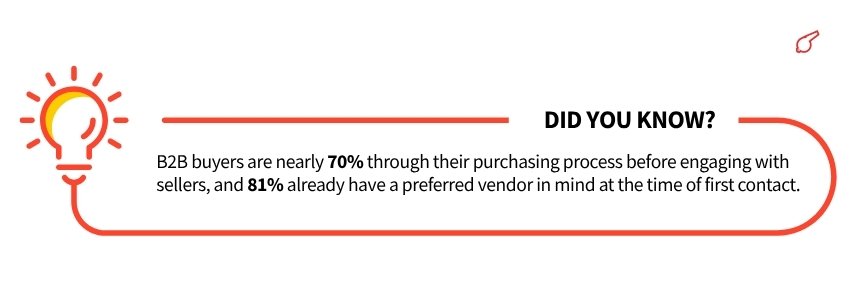
The average B2B buyer completes roughly 67% of their purchase decision before ever initiating contact with a vendor. That means your website is doing the heavy lifting during the most critical phase of the buying journey qualification, comparison, trust-building, and intent signaling. An outdated B2B website doesn’t just look bad. It actively erodes pipeline velocity, inflates your cost per lead, and hands opportunities to competitors with sharper digital presences.
This guide breaks down why B2B website modernization is a revenue imperative and how to approach it strategically as a demand generation, marketing, or sales leader.
TL; DR
Who this is for: Demand Generation Managers, B2B Marketing Directors, Revenue Marketing Leaders, Sales Enablement Managers, CMOs, and Growth Leaders who suspect their website is underperforming as a sales asset and want a practical roadmap to fix it.
- The trust problem: Outdated B2B websites signal neglect to modern buyers who complete 70%+ of their research before ever contacting sales. Your site either earns trust or loses deals silently.
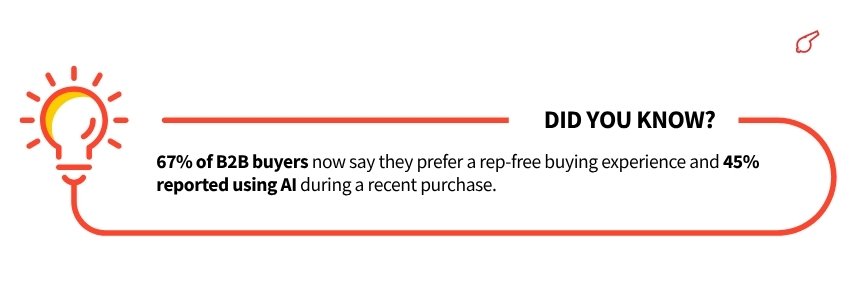
- Buyer expectations have shifted: Today’s B2B buyer expects a personalized, frictionless digital experience comparable to B2C generic websites to no longer cut it.
- Friction kills conversions: Slow load times, buried CTAs, poor mobile experience, and unclear messaging are the most common revenue leaks on B2B websites.
- UX and CRO are revenue levers: Strategic UX improvements better navigation, clearer value props, targeted landing pages directly improve lead quality and volume.
- Your website belongs to the sales stack: A modernized B2B website integrates with your CRM, MAP, and ABM tools to automate lead qualification and accelerate pipeline velocity.
- You can measure the ROI: From MQL volume to pipeline contribution and time-to-close, website modernization has a clear, trackable impact on revenue.
Your Website Has a Pipeline Problem and Most Teams Don’t See It
Here’s a hard truth that most B2B revenue teams overlook: your website isn’t just a digital brochure. It’s your highest-volume sales rep one that’s working 24/7, engaging every prospect before they ever talk to a human. And if it hasn’t been modernized in the last two to three years, it’s almost certainly costing you deals.
The average B2B buyer completes their purchase decision before ever initiating contact with a vendor. That means your website is doing the heavy lifting during the most critical phase of the buying journey qualification, comparison, trust-building, and intent signaling. An outdated B2B website doesn’t just look bad. It actively erodes pipeline velocity, inflates your cost per lead, and hands opportunities to competitors with sharper digital presences.
This guide breaks down why B2B website modernization is a revenue imperative and how to approach it strategically as a demand generation, marketing, or sales leader.
Why Outdated B2B Websites Destroy Pipeline Trust
Trust is the currency of the B2B sales process. Long deal cycles, high contract values, and multi-stakeholder buying committees mean that every touchpoint including your website contributes to (or detracts from) the trust equation.
An outdated B2B website signals neglect in ways buyers consciously and unconsciously register: slow page speeds that suggest poor technical standards, design patterns from a previous decade that make your brand feel behind the curve, messaging that doesn’t reflect your current product or positioning, and case studies that are three years old.
In a world where enterprise buyers research vendors the same way they research hotels reading reviews, comparing alternatives, judging the quality of digital presence, a stale website tells a story you don’t want to tell. It says: “If this is how they present themselves, imagine how they’ll treat us as a customer.”
The downstream impact is measurable. Prospects bounce. Qualified leads don’t convert to MQLs. Sales cycles stretch because trust must be rebuilt from scratch in later conversations. A modernized B2B sales website, by contrast, does the pre-selling so by the time a prospect reaches sales, they’re already partially convinced.
Also Read
What Modern B2B Buyers Actually Expect from Your Website
The consumerization of B2B buying behavior is real and accelerating. The same person who expects a seamless, personalized experience on a consumer app arrives at your B2B website with the same expectation and gets frustrated when it doesn’t deliver.
Modern B2B buyers expect your website to:
Speak directly to their role and industry. Generic “we help businesses grow” messaging converts poorly. A Demand Generation Manager and a CFO visiting the same page have different pain points, different success metrics, and different questions. Websites that segment messaging by persona or vertical even minimally consistently outperform those that don’t.
Provide self-service content to advance the purchase decision. Buyers want access to pricing frameworks, ROI calculators, comparison guides, detailed case studies, and product documentation without having to fill out a form or wait for a sales call. Gating too much content too early creates friction that modern buyers simply walk away from.
Load fast and work flawlessly on mobile. Over half of B2B decision-makers research vendors on mobile devices. A website that renders poorly on a phone or takes more than three seconds to load loses that audience immediately.
Signal credibility without demanding trust. Social proof client logos, specific outcome metrics in case studies, third-party review badges, certifications need to be visible above the fold, not buried in a testimonials page that nobody navigates to.
The gap between these expectations and the reality of most B2B websites is where pipeline leaks.
The Hidden Friction Points Blocking Your Leads
When B2B marketing teams audit their own websites for conversion barriers, they often find the same culprits. These aren’t exotic technical problems they’re structural and strategic friction points that compound quietly over time.
Weak or buried calls to action. The most common lead generation failure on B2B websites isn’t the absence of a CTA, it’s CTAs that are ambiguous, passive, or positioned too late in the user journey. “Learn more” and “Contact us” are not conversion-driving CTAs. Specific, value-oriented CTAs “See how [Company Type] companies reduce churn by 30%” or “Get a free website audit” convert significantly better.
Lack of intent-based routing. Most B2B websites treat all visitors identically. A first-time visitor from a cold ad and a returning visitor who has read six blog posts and viewed the pricing page are in completely different stages of intent, but they often see the same homepage. Without behavioral triggers or personalization, you’re leaving qualification signals on the table.
Unclear navigation and information architecture. Buyers who can’t quickly find what they need don’t call sales when they leave. Navigation structures designed around internal org charts rather than buyer journeys are one of the most persistent structural problems in B2B web design.
Forms that create more friction than value. Long lead capture forms with 10+ fields, no progressive profiling, and no indication of what happens after submission are lead killers. Modern B2B lead generation websites use shorter forms, enrichment tools (like Clearbit or ZoomInfo integrations), and clear post-submission expectations to increase form completion rates.
No clear path for different buyer personas. If a VP of Sales and a Head of Engineering land on the same product page and see the same messaging, one of them probably both will feel like your product isn’t quite right for them.
UX and CRO Improvements That Drive Sales-Ready Leads
B2B conversion optimization isn’t about button color A/B tests. It’s about systematically removing barriers between a qualified prospect’s intent and your pipeline.
The highest-impact UX and CRO improvements for a sales-focused B2B website typically fall into four categories:
Persona-based landing pages and journey architecture. Building dedicated landing pages for each primary persona segmented by role, industry, or company size allows you to match messaging to intent. This is especially powerful for paid demand generation campaigns, where matching message-to-market fit between ad copy and landing page is the single biggest driver of conversion rate improvement.
Value proposition clarity above the fold. Your homepage has seconds to answer three questions for a new visitor: What do you do? Who do you do it for? Why should I care? Most B2B websites bury the answers. A modernized site surfaces a specific, differentiated value proposition immediately not a tagline, but a clear statement of the outcome you deliver and for whom.
Social proof integration throughout the buyer journey. Rather than isolating social proof to a dedicated testimonials page, modern B2B websites weave it into the full user journey of client logos near the top of the homepage. Relevant case study snippets on product pages, specific outcome metrics near CTAs. This keeps trust signals present at every decision point.
Live chat and chatbot qualification flows. Conversational lead qualification through tools like Drift, Intercom, or HubSpot’s chatbot captures intent signals from visitors who aren’t ready to fill out a form. A well-designed qualification flow can identify ICPs, route them appropriately, and book meetings directly on the website, significantly compressing time-to-first contact.
Did You Know?
Gartner research shows B2B buyers spend only 17% of their total buying time meeting with potential suppliers meaning the other 83% of the decision is shaped by digital touchpoints, your website being the most controllable one.
Also Read
Integrating Your Website into the Broader Sales and CRM Workflow
A modernized B2B website doesn’t operate in isolation. The biggest unlock in modern B2B web strategy isn’t designed it’s treating the website as a node in the broader revenue technology stack.
Account-based marketing (ABM) website personalization is now accessible to mid-market B2B companies, not just enterprises. Tools like Mutiny, Intellimize, or built-in Terminus capabilities allow you to serve different homepage messaging, case studies, and CTAs to visitors from specific companies or industries a direct extension of your ABM strategy that can dramatically improve pipeline from target accounts.
CRM and MAP integration for lead qualification automation ensure that every form of submission, content download, and page visit is routed, scored, and actioned in your sales workflow without manual intervention. A lead that downloads a pricing guide, reads a case study, and visits your demo page is exhibiting high-intent behavior. Your website should be triggering a prioritized sales alert, not sitting in a batch of daily exports.
Intent data platforms like Bombora or G2 Buyer Intent, when wired to your website’s retargeting and sales alerting infrastructure, allow you to identify companies researching your category before they ever land on your site and use your website as the first personalized touchpoint when they do arrive.
The modern B2B website is the front door of an integrated pipeline machine. Modernizing the website without connecting it to the sales stack produces prettier analytics, not more revenue.
Also Read
How to Measure the Revenue Impact of Website Modernization
Revenue marketing leaders who invest in B2B website modernization need to connect the investment to pipeline and revenue outcomes, not just traffic and engagement metrics.
The metrics framework that matters:
Pipeline contribution rate: What percentage of new pipelines touched the website before entering the CRM? For most B2B companies, this is over 80% which makes website performance a core pipeline metric, not a marketing vanity metric.
MQL volume and quality: Is the website generating more marketing qualified leads? Are those leads converting to SQLs at a higher rate after modernization? Changes in MQL-to-SQL conversion are a direct signal of whether website improvements are attracting better-fit buyers.
Time-to-close correlation: Do deals that originated from high-intent website behavior (multiple visits, specific page patterns, content downloads) close faster and at higher ACV than average? This data, tracked in your CRM, builds the business case for continued investment in B2B website personalization and content.
Engagement quality by persona segment: Are the personas you targeted with dedicated landing pages or messaging tracks showing higher engagement, lower bounce rates, and better lead quality than the baseline? This validates persona-based segmentation as a revenue strategy, not just a UX exercise.
Form conversion rate and lead enrichment rate: What percentage of website visitors convert to a CTA? Of those who do, how much does it have enough data in your CRM to be immediately actionable by sales? These metrics track the health of your lead capture and qualification infrastructure.
A modernized B2B website with proper analytics instrumentation turns your website from a cost center into a measurable revenue asset one that your entire go-to-market team can rally around.
The Modernization Roadmap: Where to Start
For most B2B marketing and revenue teams, a full website overhaul is neither feasible nor necessary as a first step. A phased modernization approach prioritized by revenue impact typically delivers the fastest ROI.
Phase 1 – Audit and quick wins (30–60 days): Conduct a conversion audit of your highest-traffic pages. Identify the top friction points in your lead capture flow. Improve CTA specificity, update social proof with recent metrics, and fix the most glaring mobile experience issues. These changes are low-cost and often deliver immediate improvements in conversion rate.
Phase 2 – Persona and journey architecture (60–120 days): Build out dedicated persona-based landing pages, restructure navigation around buyer journeys rather than internal org charts and integrate your website more tightly with your CRM and marketing automation platform. This phase produces the biggest lift in lead quality and MQL-to-SQL conversion.
Phase 3 – Personalization and ABM integration (ongoing): Layer in account-based personalization for your target account list, implement chatbot qualification flows, and build intent-based nurture triggers. This phase transforms your website from a passive information resource into an active participant in your pipeline generation strategy.
Final Thought: Your Website Is Either Working for Revenue or Against It
There is no neutral position for a B2B website. Every month your site goes without modernization is a month where prospects are bouncing, leads are leaking, and deals that should be in your pipeline are going to competitors who invested in their digital presence.
The good news is that B2B website modernization done strategically, connected to the sales stack, and measured against pipeline outcomes is one of the highest-ROI investments available to modern revenue marketing teams.
At ColorWhistle, we’ve helped B2B companies and SaaS businesses transform their websites from static digital brochures into conversion-optimized, CRM-integrated pipeline assets. Whether you’re starting with a conversion audit or planning a full redesign, the path to more qualified leads starts with treating your website as the revenue engine it should be.
Ready to diagnose what your B2B website is costing your pipeline? Talk to the ColorWhistle team
FAQs
How do I know if my B2B website is hurting my pipeline?
Look for signals like high bounce rates on key landing pages, low form conversion rates, and MQLs that sales consistently reject. If prospects are visiting but not converting, your website has friction, not a traffic problem.
What’s the difference between a website redesign and B2B website modernization?
A redesign focuses on aesthetics; modernization connects your website to revenue outcomes of CRO improvements, CRM integration, persona-based messaging, and lead qualification automation. Think of modernization by optimizing your website as a sales asset, not just a visual refresh.
How long does it take to see ROI from B2B website modernization?
Quick wins like CTA improvements, updated social proof, and form optimization can show measurable lifts in conversion rate within 30–60 days. Deeper changes like ABM personalization and CRM integration typically show pipeline impact within one to two quarters.
 University & School Website Modernization: St...