


WordPress Multisite: Tips and Best Practices for Managing Multiple Sites

Powered by an expert content team, this blog blends SEO precision with compelling storytelling. Every insight is supported by data-driven research, ensuring content that ranks, engages, and drives conversions.

Our authors are proven experts in their fields, writing on topics where they have demonstrated expertise. Every piece of content undergoes peer review and validation by industry professionals.
AI Summary
Key Highlights of WordPress Multisite Management Tips
This post explores how WordPress Multisite simplifies managing multiple websites from a single installation. The key insight: centralized control reduces complexity and boosts efficiency across site networks. It covers how Multisite works, benefits like shared resources and scalability, and best practices such as domain mapping, limited plugin access, and performance optimization with caching and CDN. The guide serves web developers and business owners aiming to streamline multi-site administration, enhance security, and maintain consistent branding. Readers gain actionable strategies to implement, monitor, and secure a Multisite network, enabling scalable growth and reduced maintenance overhead.
Managing multiple websites individually can quickly become complex, expensive, and time-consuming. WordPress Multisite solves this by allowing businesses to manage multiple websites from a single WordPress installation, with centralized control, shared resources, and scalable growth.
In 2026, WordPress Multisite is widely used by enterprises, universities, SaaS platforms, franchises, and global brands that need consistency, security, and speed across multiple sites.
This guide explains how WordPress Multisite works, when to use it, its benefits, limitations, and best practices for managing a Multisite network effectively.
What is WordPress Multisite?
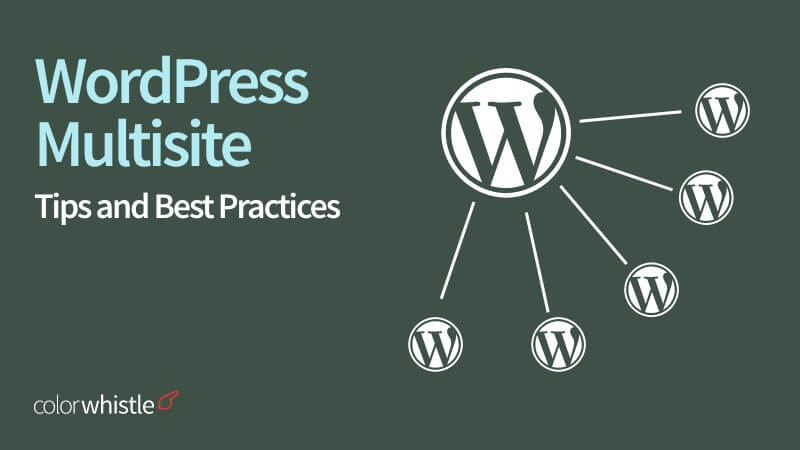
WordPress Multisite allows you to create, manage, and scale multiple WordPress websites from a single dashboard. Instead of maintaining separate installations, all sites within a Multisite network share the same WordPress core while retaining their own content, users, and settings.
This feature can be enabled on an existing WordPress site or implemented during a new setup by adding a few configuration lines to the WordPress installation. In 2026, WordPress Multisite is widely used by businesses, educational institutions, franchises, and enterprises that need centralized control, consistent branding, and efficient site management.
If you’re planning to expand your online presence and manage multiple websites efficiently, consider professional WordPress development services to implement, optimize, and scale your WordPress Multisite network securely and performance-ready.
How WordPress Multisite Works
Modern WordPress Multisite setups often integrate cloud hosting, CDN services, and object caching solutions to ensure performance, scalability, and high availability.
WordPress Multisite operates by creating a network of websites on top of a single WordPress installation. Instead of managing multiple independent WordPress setups, all sites in the network share the same core files, themes, plugins, and database structure, while maintaining separate content and configurations.
At the top level, a Super Admin controls the entire network through a centralized dashboard. This role manages global settings, enables or disables plugins and themes, and oversees all sites within the network. Individual site administrators can manage their own content, users, and settings without affecting other sites in the network.
Each site in a WordPress Multisite network functions independently from a content perspective. Pages, posts, media, and users are stored separately, allowing each site to maintain its own identity while benefiting from shared resources. This structure makes it easier to maintain consistency, reduce duplication, and streamline updates across multiple websites.
WordPress Multisite also supports domain mapping, allowing each site to use its own custom domain. This means visitors experience each site as a standalone website, even though it is part of a shared network behind the scenes.
In modern hosting environments, WordPress Multisite is commonly deployed with cloud infrastructure, content delivery networks (CDNs), and caching layers. These integrations improve performance, scalability, and reliability, especially for networks handling high traffic or multiple geographic regions.
Overall, WordPress Multisite simplifies the management of multiple related websites by centralizing control, reducing maintenance overhead, and enabling scalable growth from a single, unified platform.
Also Read
What are the Benefits of WordPress Multisite?
Centralized Governance
Manage security, updates, and policies from one dashboard
Scalable Infrastructure
Easily add hundreds of sites without duplicating resources
Cost Optimization
Reduced hosting, plugin, and maintenance costs
Brand Consistency
Shared themes ensure visual and UX consistency
Role-Based Access Control
Granular permissions for teams and departments
Faster Deployment
Launch new sites in minutes using predefined templates
WordPress Multisite: Key Features
- Allows to run a network of websites and blogs from a single WordPress installation
- Allows to create a network of directories or subdomains
- Easily replicates functionalities across websites
- If you are the Super Admin, you can have control of the entire network
- Allows you to customize the branding of each website, including logos, colors, and fonts
- WordPress Multisite can be hosted on a shared server, which can help to reduce hosting costs
- Makes it easy to update WordPress, themes, and plugins across all your websites from a single location
- allows you to manage user accounts across all your websites, with different roles and permissions available for each user
Tips and Best Practices for Managing Multiple Sites
Managing multiple websites through WordPress Multisite requires careful planning, consistent governance, and performance-focused decisions. Following best practices helps maintain stability, security, and scalability as your network grows.
1. Centralize Network Administration
Assign Super Admin access only to trusted users. Centralized control ensures that critical updates, plugins, and themes are managed consistently across all sites, reducing errors and security risks.
2. Use Domain Mapping for Better SEO
Map custom domains to individual sites instead of using subdirectories or subdomains. This improves brand identity, user trust, and search engine performance for each site in the network.
3. Limit Plugin and Theme Access
Allow only essential plugins and themes at the network level. Restricting access prevents compatibility issues and ensures consistent functionality across all sites.
4. Optimize Performance with Caching and CDN
Use object caching solutions such as Redis or Memcached and integrate a Content Delivery Network (CDN) to improve loading speed and handle high traffic efficiently across the entire network.
5. Monitor Security at the Network Level
Implement network-wide security policies, including regular updates, strong password enforcement, firewall protection, and malware scanning to safeguard all sites from vulnerabilities.
6. Regularly Audit Sites and Users
Periodically review inactive sites, unused plugins, and outdated user accounts. Cleaning up unused resources improves performance and reduces security exposure.
7. Test Changes in a Staging Environment
Before applying updates or configuration changes network-wide, test them in a staging environment. This minimizes downtime and prevents unexpected issues across live sites.
Limitations of WordPress Multisite
While powerful, WordPress Multisite is not suitable for every use case.
Key limitations include:
Plugin conflicts affect the entire network
Performance bottlenecks if hosting is poorly optimized
Complex database structure for large-scale customization
Not ideal for unrelated or client-owned websites
Use a centralized dashboard – Use a centralized dashboard to manage all your WordPress websites from one location. This would allow you to perform updates, backups, security checks, and other tasks across multiple sites under a single roof
Standardize your plugins and themes – Ensure to keep the same set of plugins and themes across all your sites which would help in consistency and make it easier to manage updates and security patches. Consider creating a list of approved plugins and themes that you use across all your sites.
Automate tasks where possible – Use automation tools to automate routine tasks such as backups, updates, and performance checks. This saves you time and ensures that these tasks are performed regularly
Use version control – Use a version control system to manage changes to your WordPress sites. This helps you to track changes, revert to previous versions, and collaborate with other team members more effectively
Use a content management system – Make use of a content management system (CMS) such as WordPress Multisite or a headless CMS to manage your content across multiple sites. This helps you to streamline content creation and management across your sites
Monitor site analytics – Use analytics tools such as Google Analytics or Jetpack to track site traffic and engagement. It helps you to identify trends and opportunities for improvement across your sites
Create a backup strategy – Make sure you have a backup strategy for all your WordPress sites. Let it be daily or weekly backups, stored on a separate server or cloud service, having a backup strategy helps you to quickly restore your sites in the event of a data loss or security breach.
Use a staging environment – Before making any changes to your live WordPress sites, consider using a staging environment to test updates, plugins, and themes. Here, you can identify and resolve issues before they affect your live site.
Monitor site performance – Use monitoring tools to track site uptime, speed, and performance. Through this, you can identify issues before they become major problems and ensure your sites are running smoothly.
Implement security best practices – Make sure to follow WordPress security best practices, such as using strong passwords, keeping your site and plugins/themes up to date, and implementing two-factor authentication. Additionally, use security plugins to provide additional protection.
Also Read
Most Common Use Cases of WordPress Multisite
Corporate Websites – Large organizations often make use of WordPress Multisite to manage their various websites from a single dashboard. This makes it easier to maintain consistency in branding and content across multiple sites.
Educational Institutions – WordPress Multisite is also commonly used by schools and universities to manage their various departmental websites, as well as student and faculty blogs.
News and Media Organizations – News and media companies frequently use WordPress Multisite to manage multiple websites, such as news portals, blogs, and microsites, from a single installation.
E-commerce Websites – WordPress Multisite can also be used to manage multiple e-commerce websites from a single installation, making it easier to maintain consistency in branding and design across all sites while providing E-commerce Website Development Services.
Community Networks – WordPress Multisite can be used to create and manage community networks, such as social networks or online marketplaces, where multiple users can create their own sites or profiles within the network.
Membership Websites – WordPress Multisite can also be used to manage multiple membership websites from a single installation, making it easier to manage user accounts and content across all sites.
Personal Websites – Migrate all your personal websites to one Multisite installation as this would help in having a common code, save hosting space, and also you can display data from one site in the network on another site.
Looking for WordPress Development Services?
Seize and experience the transformative impact of WordPress solutions with ColorWhistle.

Ready for WordPress Multisite?
WordPress Multisite is a powerful solution for organizations that manage multiple related websites and require centralized control, scalability, and consistent performance. When implemented correctly, it reduces maintenance effort while enabling faster growth across your digital ecosystem.
If you’re considering WordPress Multisite for your business, partnering with an experienced WordPress development team ensures the right architecture, security, and performance from day one. A well-planned setup helps you avoid common pitfalls and supports long-term scalability.
For more interesting and professional WordPress development services, you can contact ColorWhistle by sending us a message or call us at +1 (210) 787-3600, we’ll get back to you at the earliest. We provide services tailored to your requirements that suit your business.
What’s Next?
Now that you’ve had the chance to explore our blog, it’s time to take the next step and see what opportunities await!
Read Similar Content
Wish to Explore Our Services?
Have an Idea? or Project Scope?
In quest of the Perfect WordPress Solutions Buddy?
Be unrestricted to click the other trendy writes under this title that suits your needs the best!
- Building Healthcare Appointment System With WordPress
- Top 3 WordPress Translation Plugins: Compare with Best Practices & Limitations
- Exploring React for WordPress Gutenberg Development: Leveraging its Capabilities
- Top ChatGPT Plugins for WordPress
- The Art of Love and Code: A Developer’s WordPress Journey
- Large WordPress Website Development For Businesses – A Master Guide
- Best Practices for WordPress Plugin Developmentz
 Emerging Sustainable Engineering Trends in Sw...