




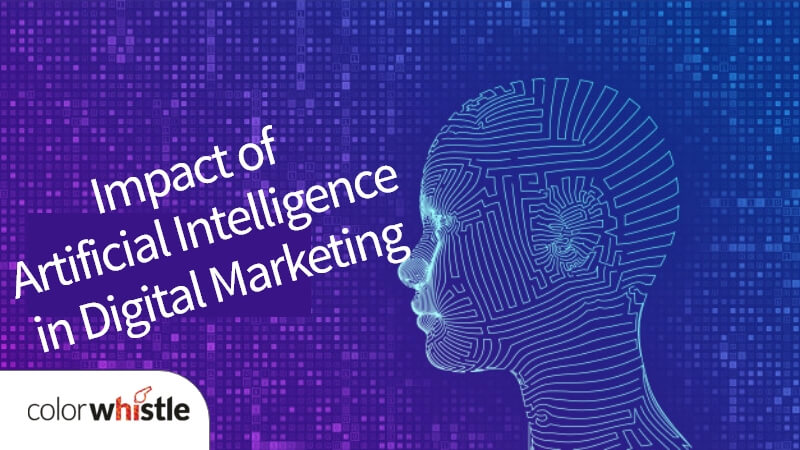
Impact of AI in Digital Marketing – What’s in Store?

Powered by an expert content team, this blog blends SEO precision with compelling storytelling. Every insight is supported by data-driven research, ensuring content that ranks, engages, and drives conversions.

Our authors are proven experts in their fields, writing on topics where they have demonstrated expertise. Every piece of content undergoes peer review and validation by industry professionals.
AI Summary
Impact of AI in Digital Marketing - What's in Store?
This serves as a practical guide for marketers seeking to leverage AI in digital marketing. The key insight: AI enhances efficiency and personalization across SEO, content, email, social media, and affiliate marketing. The blog details AI-driven tools and strategies like machine learning for SEO tasks, AI-generated content, predictive analytics, optimized email campaigns, social sentiment analysis, and affiliate performance tracking. It highlights benefits such as improved customer experience, higher ROI, and targeted audience engagement. By adopting these AI applications, marketers can save time, increase conversions, and stay competitive in a fast-evolving digital landscape.
Artificial intelligence is no longer an emerging trend in digital marketing. It is the core decision engine behind how brands acquire traffic, personalize experiences, allocate budgets, and measure growth. AI now influences visibility, relevance, and revenue at scale. Organizations that fail to integrate AI at a strategic level risk declining performance across search, paid media, and customer engagement.
To leverage the power of AI in your digital marketing efforts, partnering with a reputable digital marketing company can provide invaluable expertise and insights.
Global revenues from AI adoption in marketing are expected to hit nearly USD 47 billion by 2025 and surpass USD 107 billion by 2028.
In this blog, we have discussed various digital marketing channels in which AI will bring out notable differences.
Let’s get started!
Also Read
The Evolution of AI in Digital Marketing (2019–2026)
Early AI adoption in marketing focused on automation, email scheduling, basic chatbots, and rule-based personalization. Between 2020 and 2023, machine learning improved targeting, attribution, and ad optimization.
The period from 2024 to 2026 marks a decisive shift:
AI now performs predictive, contextual, and interpretive functions, not just execution.
Modern AI systems:
- Interpret user intent across multiple touchpoints
- Predict outcomes rather than report historical data
- Shape what content is surfaced, summarized, or ignored
- Optimize marketing decisions at scale, in real time
This evolution has redefined how digital marketing works at a structural level.
AI and Search Engines: How Discovery Works in 2026
Search behavior and search engines have fundamentally changed. Platforms such as Google now rely heavily on AI-driven systems to interpret queries, evaluate content quality, and generate summaries directly within search results.
In 2026, search engines prioritize:
- Search intent, not keyword repetition
- Topical authority, not isolated blog posts
- Entity credibility, validated across multiple sources
- Engagement signals, such as dwell time and interaction
This means visibility is no longer guaranteed by ranking alone. Content must be trustworthy enough to be selected by AI systems for inclusion in AI-generated answers, summaries, and overviews.
The Rise of AI Overviews and Zero-Click Search
One of the most significant changes in digital marketing is the rise of AI-generated answers and overviews within search results. These experiences reduce the need for users to click through multiple links, reshaping traditional traffic models.
In this environment, marketers must adjust their expectations. Visibility no longer guarantees clicks, and success cannot be measured solely by organic traffic volume. Instead, authority and influence become central metrics. Content must be structured and written in a way that AI systems can confidently summarize, reference, or quote.
This shift reinforces the importance of EEAT. Content that lacks depth, originality, or credibility is unlikely to be selected by AI systems, regardless of its ranking position.
AI’s Role in SEO Strategy
Search engine optimization has shifted from manual optimization to AI-assisted strategy development.
AI tools now help marketers:
- Identify topic clusters instead of single keywords
- Detect content gaps within an entire domain
- Predict which pages are likely to lose rankings
- Optimize internal linking based on topical relevance
Human expertise remains essential for defining strategy, validating insights, and ensuring content accuracy. However, AI now handles the heavy lifting of analysis, forecasting, and optimization at scale.
AI Tools for Search & SEO
Used for analysis, forecasting, and optimization support.
- Google Search Console – search performance data, indexing signals
- Ahrefs – keyword research, backlink analysis, content gaps
- Semrush – competitor analysis, SERP tracking, topic research
- Surfer SEO – on-page structure and semantic analysis
- MarketMuse – topical authority and content planning
AI-Powered Content Marketing
Content marketing in 2026 is driven by intelligence, not volume. AI has transformed content workflows from ideation to performance optimization.
AI systems are used to:
- Analyze user intent across the buyer journey
- Predict which topics will generate long-term traffic
- Optimize content structure for readability and AI summaries
- Personalize content delivery based on behavior and context
Generative AI, supported by platforms such as OpenAI, accelerates content production. However, expert-led oversight is critical. Search engines and users increasingly reward content that demonstrates real-world experience, original insight, and subject-matter authority.
AI Tools for Content Marketing
Used for research, drafting assistance, optimization, and analysis.
- OpenAI (ChatGPT) – drafting support, summarization, outlining
- Jasper – content workflows and brand tone control
- Clearscope – relevance scoring and topic coverage
- Frase – content research and outline generation
- Anthropic (Claude) – long-form drafting, content expansion, document analysis, rewriting for clarity
- Google (Gemini) – topic research, summarization, integration with Google Docs and Workspace
- Perplexity AI – research-focused content discovery, source-backed summaries, exploratory queries
- Junia AI – SEO-focused content drafting, blog outlines, long-form article generation
Generative AI and Brand Authority
While generative AI enables scale, it also introduces risk. Inaccurate, generic, or unverified content can erode trust and visibility.
Successful brands:
- Use AI for research, structure, and optimization
- Rely on human experts for insights, opinions, and validation
- Clearly differentiate between automation and expertise
Brand authority now depends on how responsibly AI is used, not just how frequently.
AI in Paid Advertising and Performance Marketing
Paid advertising has become increasingly algorithm-driven. Platforms such as Google Ads and Meta rely heavily on AI to optimize delivery, targeting, and bidding.
In 2026, AI enables:
- Predictive bidding based on conversion likelihood
- Real-time budget reallocation across campaigns
- Continuous creative testing and optimization
- Early detection of audience fatigue
Advertisers who fail to align with AI-driven campaign structures face higher costs and diminishing returns.
Paid Advertising & Media Buying
- Google Ads – smart bidding, automated budget allocation
- Meta Ads Manager – delivery optimization and audience modeling
- Amazon Ads – AI-driven product ad placement
- Skai – cross-channel paid media optimization
Also Read
Personalization at Scale
Consumers now expect brands to understand their needs instantly. AI enables personalization at a scale that was previously impossible.
Modern AI-powered personalization includes:
- Dynamic website experiences based on intent signals
- Personalized email journeys driven by behavior prediction
- Context-aware product and content recommendations
- Adaptive offers based on lifecycle stage
Generic messaging no longer merely underperforms; it actively reduces engagement and trust.
Ethical AI, Data Privacy, and Compliance
As AI becomes more influential, ethical and regulatory considerations have moved to the forefront.
Key responsibilities for marketers include:
- Ensuring data privacy and consent compliance
- Preventing bias in targeting and personalization
- Disclosing AI-generated content where appropriate
- Maintaining human accountability in automated decisions
Responsible AI use has become a trust signal for both consumers and search engines.
AI in Social Media Marketing
Social media marketing in 2026 is shaped largely by AI-driven distribution systems. Platforms decide which posts gain visibility based on predicted engagement, relevance, and user behavior. This means success is no longer about posting frequently or following trends blindly.
AI helps marketers understand which types of content resonate with specific audiences, the best times to post, and when engagement starts to decline. It also supports social listening by analyzing conversations, sentiment, and recurring topics at scale. Instead of manually tracking comments or trends, teams can focus on responding with more relevant and timely content.
As a result, social media marketing has become more data-informed and less reactive.
Social Media Marketing & Listening
- Hootsuite – scheduling, analytics, sentiment monitoring
- Sprout Social – engagement analysis and reporting
- Brandwatch – social listening and trend analysis
- Buffer – posting optimization and performance tracking
AI in Email Marketing and Marketing Automation
In email marketing, AI is used to analyze engagement signals such as opens, clicks, website visits, and inactivity patterns. Based on these signals, AI supports functions like send-time optimization, engagement scoring, and workflow prioritization.
AI may select between predefined email variations or adjust frequency based on engagement likelihood. However, email content, automation logic, and journey design are created and controlled by marketers. AI does not independently detect user intent or rewrite messaging on its own.
Its value lies in improving timing and reducing inefficiencies, not in autonomous personalization.
Email Marketing & Marketing Automation
- HubSpot – predictive lead scoring, email optimization
- Salesforce Marketing Cloud – Einstein AI for engagement scoring
- Adobe Marketo – predictive analytics and automation logic
- Braze – behavioral triggers and lifecycle messaging
AI in Customer Relationship Management (CRM)
Modern CRM systems use AI to support lead scoring, customer segmentation, and prioritization. By analyzing interaction history and behavioral data, AI helps identify high-intent leads and potential churn risks.
These insights help marketing and sales teams focus efforts more effectively. However, CRM systems depend on accurate data and human-defined workflows. AI enhances visibility and prioritization but does not manage relationships or make final decisions.
Customer Relationship Management (CRM)
- Salesforce – Einstein AI for lead and opportunity scoring
- HubSpot CRM – predictive scoring and pipeline insights
- Zoho CRM – AI-assisted sales and customer insights
AI in Influencer and Partnership Marketing
AI is used to analyze influencer audiences, engagement quality, and historical performance. This helps marketers assess alignment and reduce the risk of ineffective partnerships.
AI can support performance tracking and audience analysis, but influencer selection, collaboration terms, and creative direction remain human responsibilities.
Influencer & Partnership Marketing
- HypeAuditor – audience authenticity analysis
- CreatorIQ – influencer discovery and measurement
- Upfluence – influencer search and analytics
AI in Market Research and Consumer Insights
AI accelerates market research by analyzing large datasets from surveys, reviews, and feedback channels. It helps identify patterns and trends faster than manual methods.
While AI improves processing speed, interpretation and strategic conclusions still require human judgment. AI supports research but does not replace qualitative analysis.
Customer Experience & Journey Analytics
- Adobe Customer Journey Analytics
- Google Analytics (GA4) – event-based behavior tracking
- Mixpanel – user journey and retention analysis
AI in Customer Support and Conversational Marketing
AI-powered chat systems handle routine inquiries using predefined knowledge bases and intent classification. They improve response speed and consistency while reducing support workload.
Complex or sensitive issues are escalated to human agents. AI supports customer support operations but does not replace human interaction. Insights from support data are often used to improve FAQs, onboarding, and content clarity.
Looking for Digital Marketing Services?
Seize and experience the transformative impact of Digital Marketing Services & Solutions with ColorWhistle.

Conclusion
Artificial intelligence is an emerging technology which can improve a vast number of fields in digital marketing. The implementation of AI in digital marketing can make things easier for both brands and customers. AI and digital marketing services together will help brands to deliver improved customer experience and will ensure faster problem-solving for customers.
Hence, make use of all the artificial intelligence tools and software that provides endless benefits and build up your business.
If you feel that you have been benefited by any of the AI technology in your digital marketing efforts, share your experiences in the comments section below.
 Website Redesign Complete Guide







Have Read This Blog, Its Amazing And Interesting. Thank You For This Informative Blog. You Have Written Very Gracefully And Meaningful Post. Always Keep Sharing With Us And Always Keep In Touch
Thanks for sharing this information. I have shared this link with others. Keep posting such information..