


Best AI Chatbots for Professional Coaches in 2026

Phurvishaa specializes in crafting travel tech and marketing content, leveraging deep research, SEO expertise, and AI-driven insights. Her strategic approach ensures content that educates, engages and delivers knowledge.

Our authors are proven experts in their fields, writing on topics where they have demonstrated expertise. Every piece of content undergoes peer review and validation by industry professionals.
AI Summary
Best AI Chatbots for Professional Coaches in 2026
This post explores the rise of AI chatbots tailored for professional coaches, aiming to educate coaches and developers on scalable, tech-enabled coaching solutions. The key insight: effective coaching chatbots support ongoing human development, not just FAQs. It covers top AI platforms that enhance coaching impact through automation, personalized interactions, and integration with existing workflows. Benefits include extended client support, ROI tracking, and workload reduction. Developers are guided on building privacy-focused, voice-consistent bots with session memory. The post empowers readers to select or create AI tools that maintain coaching integrity, improve accessibility, and boost client outcomes efficiently.
Coaching has always been a deeply human practice. It’s built on trust, conversation, and the power of a well-timed question. But something is shifting.
Enterprise clients now expect scalable, tech-enabled development programs. Individual clients want 24/7 access to support between sessions. And coaches, whether independent practitioners or part of larger firms, are under pressure to prove ROI, track outcomes, and reach more people without burning out.
Enter AI chatbots. In the last few years, a wave of AI-powered tools designed specifically for coaching has emerged. Some are built for individual coaches looking to extend their impact. Others are enterprise platforms targeting L&D teams and HR directors. And some are developer toolkits for those who want to build from scratch.
This guide covers all three angles. Whether you’re a professional coach exploring AI tools for the first time, or a developer building for the coaching market, you’ll find something useful here. We’ve also compiled a curated list of live examples to illustrate what’s already out there and working.
TL; DR
This blog is for professional coaches exploring AI tools to scale their practice, and developers building AI-powered coaching products.
- Why AI matters in coaching – client expectations are shifting; AI fills the gaps between sessions and proves ROI
- What makes a great coaching chatbot – methodology alignment, memory, privacy, and between-session continuity
- Curated list of 8 AI chatbots for coaches – CoachBot.ai, Rocky.ai, BotSaaS, AI Chatbot Coach, AICoaches.io, Bunch.ai, CoachHub AIMY™, and Wave.ai
- How developers are building for this space – common use cases, tech considerations, and what to avoid
- How to choose or build one – a practical checklist for coaches evaluating tools and developers building them
- The future of AI in coaching – human-AI collaboration, platform consolidation, and what’s coming next
What Makes a Great AI Chatbot for Coaches?
Before diving into the tools, it helps to understand what separates a good coaching chatbot from a generic one. Not all AI assistants are created equal, and the coaching context demands specific qualities.
- Conversational depth over Q&A: A coaching chatbot should ask powerful questions, not just answer them. The best tools are designed around coaching methodologies things like solution-focused coaching, the GROW model, or positive psychology frameworks rather than acting as a search engine.
- Personalization and memory: Effective coaching is ongoing. A chatbot that treats every session as a blank slate misses the point. Look for tools that track goals, remember previous conversations, and adapt over time.
- Between session continuity: The real value of AI in coaching isn’t replacing sessions it’s filling the gaps between them. Accountability check-ins, reflection prompts, and progress nudges between human sessions dramatically improve outcomes.
- Coach control and customization: The coach’s methodology, tone, and frameworks should be preserved. The best platforms let coaches encode their own approach rather than defaulting to a generic AI personality.
- Privacy and compliance: Coaching conversations can be deeply personal. Any platform handling this data needs to be GDPR-compliant, with clear data handling policies and strong user confidentiality protections.
- Analytics and outcomes: Coaches and organizations increasingly need to demonstrate impact. Platforms with built-in analytics engagement rates, goal progress, recurring themes help coaches prove value and continuously improve their programs.
The key distinction to keep in mind: a great coaching chatbot is not a glorified FAQ bot. It’s a structured, goal-oriented companion that supports human development between and alongside live coaching relationships.
Also Read
A Curated List of AI Chatbots for Professional Coaches
Here are eight standout platforms currently operating in this space, ranging from enterprise-grade solutions to nimble tools for independent coaches and developers.
CoachBot.ai
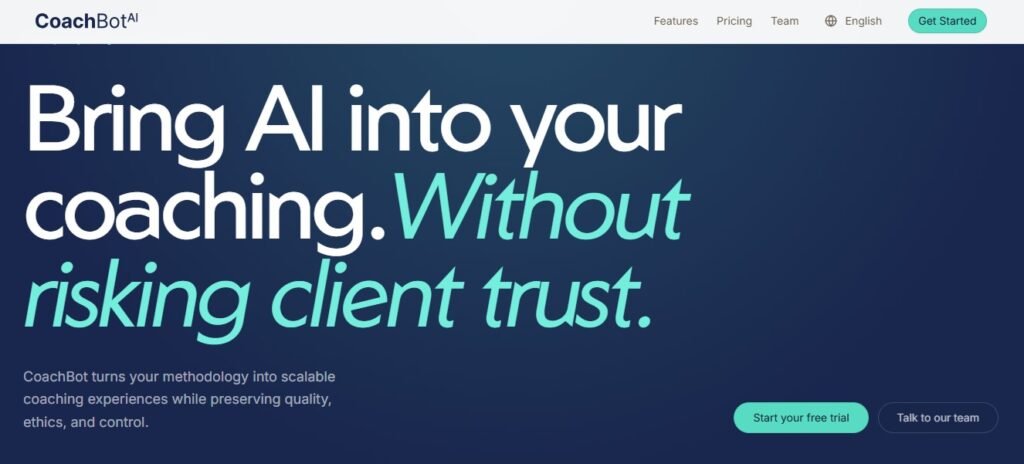
What it is: An AI coaching infrastructure platform designed for professional coaching providers who want to scale their methodology without sacrificing quality
Key features: CoachBot lets coaches encode their frameworks, tone, and programs into custom AI agents. It supports both text and voice interactions, includes built-in quality oversight and governance controls, and can be deployed as a white-labeled web app or integrated via API. It’s designed to operate at cohort and enterprise scale to think of hundreds of employees across a global organization; all receiving coaching grounded in one firm’s methodology.
Best for: Coaching firms and providers delivering programs to enterprise clients. It’s particularly well-suited for organizations that want to extend coaching beyond 1:1 sessions without hiring more coaches or compromising quality.
Limitations: Priced for professional providers (from €499/month), so it’s less accessible for solo coaches just getting started.
Notable: Trusted by 50+ leading coaching providers and referenced as GDPR and EU AI Act compliant.
Rocky.ai
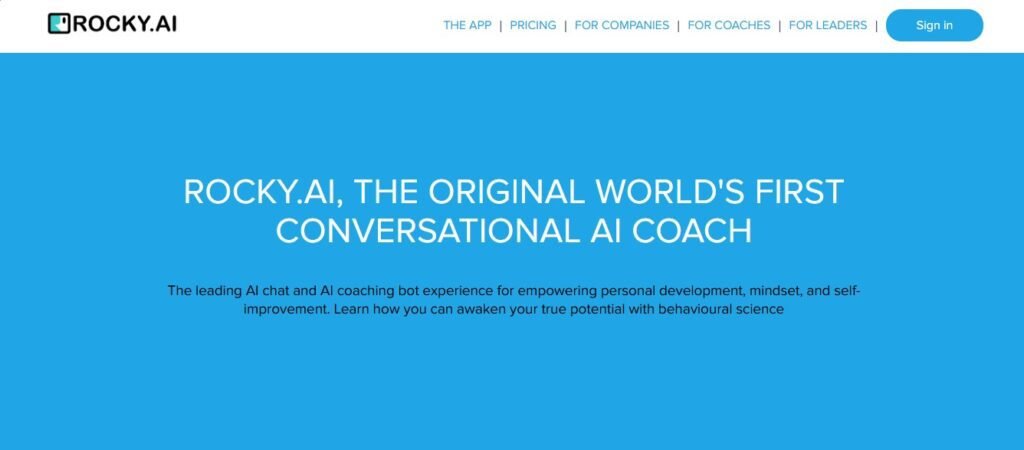
What it is: One of the earliest AI coaching platforms, Rocky.ai calls itself “the world’s first conversational AI coach.” It focuses on personal development, mindset, and leadership skills through daily micro-coaching sessions.
Key features: Rocky.AI uses positive psychology and solution-focused coaching to guide users through daily reflections and goal pursuit. It’s available as a mobile app (iOS and Android) and on Amazon Alexa, making it highly accessible. For coaches, the platform offers a white-label option to build a “digital twin” of their coaching program, essentially an AI version of themselves trained on their content and style. It also includes a coach panel for managing clients, setting personalized growth paths, and tracking progress.
Best for: Individual practitioners who want to offer scalable between-session support to clients, or coaches building their own branded AI coaching product. Also strong for HR teams focused on leadership development and employee well-being.
Limitations: Sessions are designed to be brief (around 5 minutes), so it complements deeper coaching rather than replacing it. The digital twin setup takes 2–4 weeks, and pricing varies by scale.
Notable: Follows ICF pre-release guidelines for AI coaching, with Rocky’s founder sitting on the ICF working group defining these standards.
Did You Know?
The global chatbot market size was estimated at USD 9,560.7 million in 2025 and is projected to reach USD 41,244.2 million by 2033, growing at a CAGR of 19.6% from 2026 to 2033
BotSaaS – AI Chatbot for Coaches
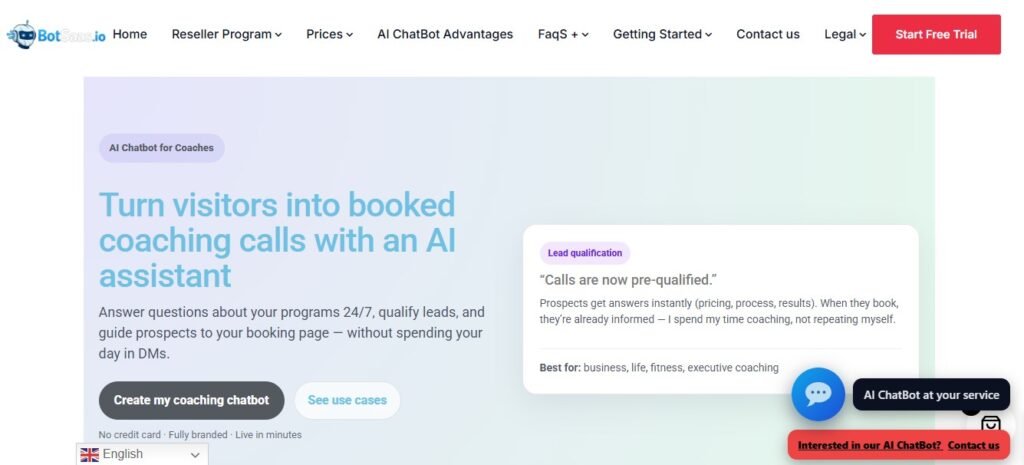
What it is: A platform that enables coaches to build and deploy custom AI chatbots on their websites and coaching platforms.
Key features: BotSaaS focuses on helping coaches automate client communication, handle intake and onboarding, answer FAQs, and engage leads essentially acting as a first line of contact for coaching businesses. It’s designed to be accessible to non-technical users with minimal setup required.
Best for: Independent coaches or small coaching businesses looking to automate administrative and client engagement tasks without significant technical overhead.
Limitations: More focused on business automation than coaching methodology, so it works better as a client-facing communication tool than a deep coaching companion.
AI Chatbot Coach (aichatbots.coach)
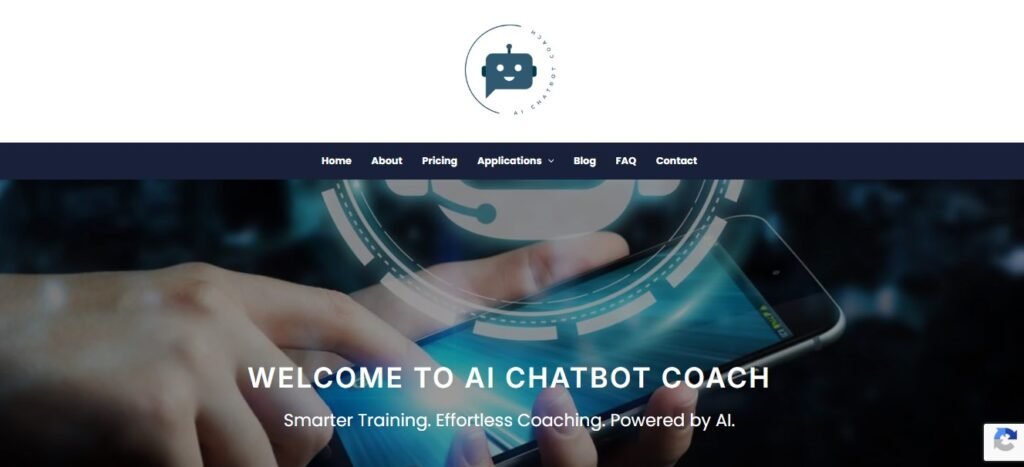
What it is: A custom AI chatbot development service and platform targeting startups, small businesses, and professional coaches who need tailored solutions.
Key features: AI Chatbot Coach offers both off-the-shelf applications and custom builds. Their coaching-specific product, FlowCoach, is designed for coaches who want to handle routine client questions, session follow-ups, and progress tracking automatically. The platform integrates directly with WhatsApp as a significant advantage for coaches whose clients are already active there and supports text, voice, and image inputs. Custom development is priced on a project or subscription basis.
Best for: Coaches and coaching businesses that want a highly customized solution with WhatsApp integration, or organizations with specific compliance and training requirements (they also offer healthcare-specific and study skills applications).
Limitations: The most robust use cases require custom development, which comes with associated cost and time investment.
Notable: Their CareCoach product (for nursing education) shows the platform’s ability to adapt coaching-style AI to highly specialized professional domains.
If you’re looking to add an AI chatbot to your coaching website, the ColorWhistle AI Chatbot plugin for WordPress is a simple, no-fuss way to get started.
AICoaches.io
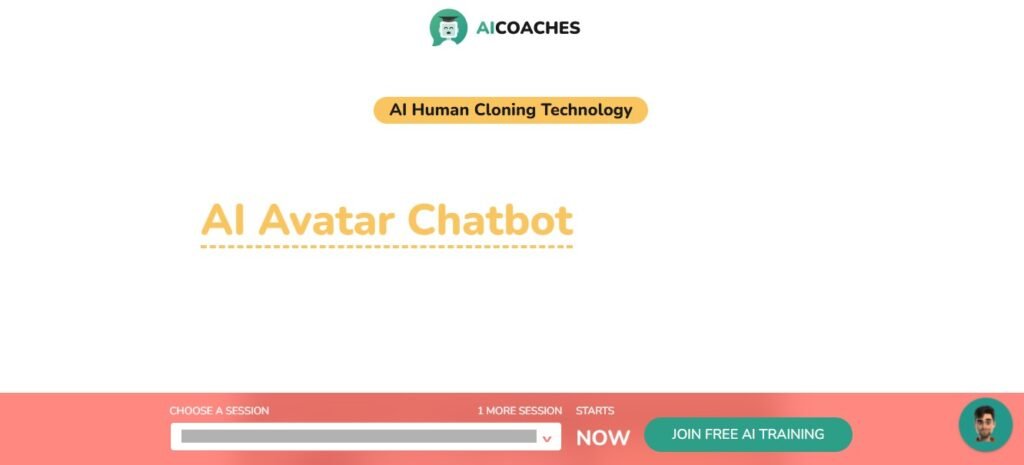
What it is: A tool primarily aimed at digital marketers, online coaches, and agency owners who want to clone themselves (or any expert) into a customizable AI avatar chatbot.
Key features: AICoaches.IO allows users to train an AI chatbot on their own content and style uploads from YouTube links, PDFs, website URLs, and text are all supported. The resulting avatar can be customized with a specific personality, coaching style, and visual appearance, then embedded anywhere. It includes lead capture, payment processing integrations, and analytics. The platform also comes with pre-built “Done-For-You” AI coaches in niches like life coaching, fitness, financial coaching, and more.
Best for: Online coaches in the digital marketing and personal development space who want to scale their reach, generate leads, or add AI-powered membership value without needing technical skills. Also relevant for developers or agencies building AI coaching products for clients.
Limitations: Positioning leans more toward business growth and sales automation than pure coaching quality. Not the right fit for enterprise L&D or ICF-certified professional coaching contexts.
Did You Know?
Businesses are saving big Companies that have adopted AI chatbots report an average savings of $300,000 per year, with chatbots collectively automating 2.5 billion labor hours annually across industries.
Bunch.ai
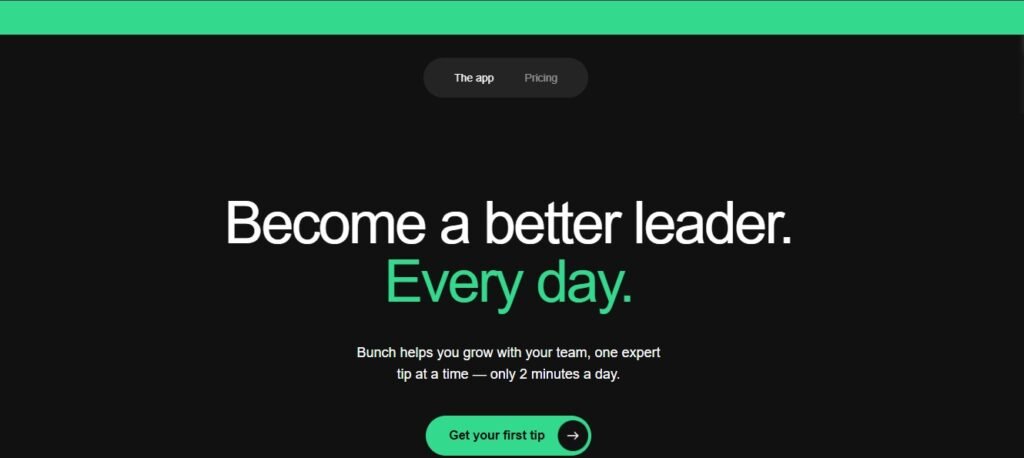
What it is: A leadership development app featuring an AI coach named Bunchee, designed to help professionals grow through daily 2-minute expert tips.
Key features: Bunch.AI centers on a distinctive “leadership style discovery” model — users identify their style from a range of archetypes, then receive personalized daily coaching tips curated by expert coaches, managers, and operators. Bunch is the always available AI coach that answers leadership questions anytime. The platform also supports peer learning through private groups, allowing teams to reflect and stay accountable together.
Best for: Professionals and team leaders who want lightweight, daily leadership development built into their routine. Also strong for organizations looking for a team-based coaching tool that encourages social learning.
Limitations: Designed for daily micro-learning rather than deep coaching engagements. Better as a supplement to professional coaching than a replacement for it.
Notable: Used by leaders at companies including Amazon, Meta, and Microsoft, and currently running a public fundraising campaign.
CoachHub AIMY™
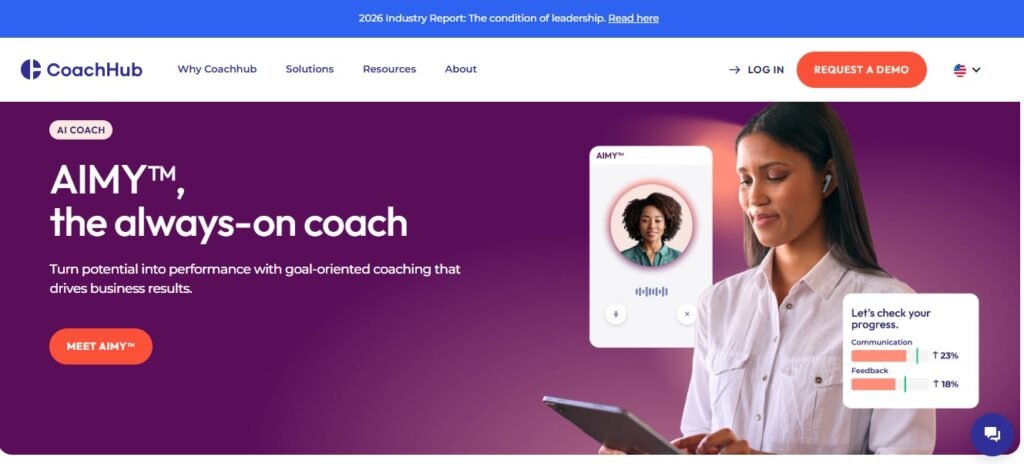
What it is: AIMY™ is the AI coaching product from CoachHub, one of the world’s largest digital coaching platforms. It’s a standalone AI coach built to make professional-quality coaching accessible to every employee in an organization, not just senior leaders.
Key features: AIMY™ is co-created with leading coaching institutions and built on behavioral science. It supports goal-oriented coaching, situational coaching for daily challenges, video role-plays to practice difficult conversations, and progress tracking with smart nudges. Importantly, it integrates with Workday and can be customized to reflect an organization’s values and competency frameworks. Conversations remain confidential, with only anonymized, aggregated insights surfaced to HR teams. It’s certified for ISO 27001, SOC 2 Type 2, and GDPR compliance.
Best for: Enterprise HR and L&D teams looking to scale coaching company wide. AIMY™ is distinct from a human coaching supplement it’s designed as a standalone AI coach for employees who don’t have access to a personal coach.
Limitations: Enterprise-only; not designed for independent coaches or small businesses. Requires organizational onboarding and is built for deployment at scale.
Notable: CoachHub reports a 22% increase in workforce productivity, 21% improvement in employee engagement, and 15% improvement in talent retention associated with AI coaching.
Wave.ai (now part of Alan)
What it is: Wave.ai is an AI-powered workplace wellness and coaching platform that has since been acquired by Alan, a European health insurance and wellness company. The integration represents an interesting signal about where AI coaching is heading toward embedded, continuous health and well-being support within broader employee benefit ecosystems.
Key features: Wave.ai focused on personalized coaching for workplace well-being, combining professional coaching with AI-driven check-ins and mental health support. Now under Alan’s platform, these capabilities are being merged with health insurance and employee wellness infrastructure.
Best for: Organizations interested in AI coaching as part of a broader employee health and well-being strategy, rather than a standalone development tool.
Notable: The acquisition signals growing interest from health and benefits platforms in AI coaching expect to see more consolidation in this space.
Disclaimer: The tools listed in this blog have been curated based on publicly available information at the time of writing. Features, pricing, and availability may vary. We recommend visiting each platform’s official website for the most up-to-date details.
How Developers Are Building AI Chatbots for Coaches
For developers entering this space, the opportunity is significant. Coaching is a relationship-driven, high-trust domain, which means the technology layer needs to be thoughtfully designed. Here are the common use cases developers are building around:
- Onboarding bots that standardize intake collecting client goals, context, and expectations before the first session. This saves coach time and creates a richer starting point for human sessions.
- Between-session accountability bots that check in on client progress, surface friction points, and send smart nudges when someone goes quiet on their goals.
- Session recap and synthesis tools that help coaches document key insights, action items, and progress notes automatically.
- Assessment and diagnostic bots that replace static questionnaires with conversational assessments gathering the same data in a far more engaging format.
- White-label frameworks that allow individual coaches to publish their own branded AI coaching products without building infrastructure from scratch.
On the technology side, most sophisticated platforms are built on large language models with additional layers for persona consistency, conversation memory, guardrails, and analytics. Privacy architecture is non-negotiable; any production system needs anonymization at the data layer and clear consent flows.
Key considerations for developers building in this space: maintain the coach’s voice and methodology (not generic AI tone), design for ongoing relationships rather than one-off interactions, build robust privacy controls from day one, and think carefully about escalation paths when should the bot hand off to a human?
Also Read
What to Look for When Choosing or Building One
For coaches evaluating platforms:
Ask whether the platform lets you encode your own methodology, or whether it defaults to generic coaching approaches. Check whether the AI maintains client confidentiality and complies with relevant data protection regulations in your market. Consider whether the platform provides analytics that help you demonstrate impact to clients. And think about how the AI integrates with your existing workflow, does it connect to your calendar, CRM, or existing client tools?
For developers building coaching tools:
Start with a clear coaching philosophy baked into the product, not bolted on. Memory and continuity across sessions is what separates a coaching bot from a chatbot. Built in transparency, clients should understand what they’re talking about, an AI, and what happens to their data. Design for the coach-client relationship, not around it. And build feedback loops, so the system improves based on coaching outcomes, not just engagement metrics.
The Future of AI in Coaching
The trajectory is clear: AI coaching will become a standard layer in both enterprise talent development and individual professional growth. The Wave.ai acquisition by Alan signals that AI coaching is converging with health and employee benefits infrastructure. The growth of platforms like CoachHub into AI reflects a broader shift from coaching as an executive perk to coaching as a company-wide capability.
What’s emerging is a model of human-AI collaboration in coaching, where AI handles continuity, scale, and data, and human coaches bring empathy, nuance, and depth. The best platforms being built today aren’t trying to replace human coaches. They’re trying to amplify them.
For coaches, this is an opportunity rather than a threat. The practitioners who learn to leverage AI effectively will be able to reach more clients, demonstrate more impact, and build more scalable businesses without compromising the quality of what makes great coaching great.
Final Thoughts
AI coaching tools are no longer experimental. They’re being deployed at scale inside global organizations, built into consumer mobile apps used by millions, and offered as white-label infrastructure for independent coaching practitioners.
Whether you’re a professional coach considering your first AI tool, an HR leader looking to scale development programs, or a developer building for this market, the landscape is rich and moving fast.
The tools in this guide represent some of the best of what’s available today, each with a different angle, audience, and philosophy. The right choice depends on your context, your clients, and the kind of coaching experience you want to create.
What’s certain is that the coaches and developers who engage thoughtfully with AI now will be best positioned as this space continues to evolve.
Ready to bring AI into your coaching practice? Let’s talk about what the right chatbot looks like for you and build it together.
FAQ’s
Can AI chatbots replace human coaches?
No, AI chatbots are designed to extend coaching, not replace them. They handle continuity and scale between sessions, while human coaches provide the empathy and depth that drives real transformation.
What should coaches look for in an AI chatbot?
Look for tools that reflect your methodology, maintain client confidentiality, and support ongoing goal tracking. The best platforms feel like an extension of your coaching, not a generic chatbot.
Do developers need coaching expertise to build AI coaching tools?
Not necessarily but understanding coaching frameworks like GROW or solution-focused coaching makes a huge difference. The most effective tools are built around a clear coaching philosophy, not just conversational AI.
 How Website Architecture Shapes Future AI Cap...