


AI Chatbots for Mental Health Professionals: Top Tools

Phurvishaa specializes in crafting travel tech and marketing content, leveraging deep research, SEO expertise, and AI-driven insights. Her strategic approach ensures content that educates, engages and delivers knowledge.

Our authors are proven experts in their fields, writing on topics where they have demonstrated expertise. Every piece of content undergoes peer review and validation by industry professionals.
AI Summary
AI Chatbots for Mental Health Professionals: Top Tools
This post explores how AI chatbots are addressing the global mental health care demand exceeding clinician capacity. The key insight: AI tools extend clinicians' reach by automating intake, triage, and between-session support without replacing therapy. It reviews six clinically validated chatbots like Woebot and Limbic, detailing their functions, evidence base, and target users. Mental health professionals learn how to critically evaluate chatbots based on research, compliance, crisis protocols, and integration before adoption. The guide empowers clinicians and administrators to select AI tools that enhance care efficiency and patient engagement amidst rising demand and limited resources.
Mental health demand has never been higher. Over 1.6 billion people globally need some form of behavioral healthcare, and there are only around 2.5 million clinicians to serve them. Waitlists stretch for months, and therapists are burning out trying to keep up.
AI chatbots are stepping into that gap. But this isn’t a story about robots replacing therapists; it’s about tools that extend your reach, reduce your administrative load, and support patients between sessions. Done right, they protect your time, so you can invest it where it matters most: the actual clinical work.
This guide is for mental health professionals and healthcare teams who want a grounded look at what these tools do, which ones are worth knowing, and how to think critically before adopting them. Not hype, just a clear-eyed overview of what’s out there.
TL; DR
Who this guide is for: Mental health professionals, clinic administrators, and healthcare teams exploring how AI chatbots can support intake, patient engagement, and between-session care without replacing clinical oversight.
What this guide covers:
- What AI chatbots can actually do in a clinical context – intake triage, mood tracking, CBT exercises, and patient onboarding.
- A curated look at six AI chatbots worth knowing – Woebot, Wysa, Youper, Limbic, Cass, and Headspace.
- Where each tool fits best – from between session CBT support to enterprise mental health infrastructure and patient onboarding.
- How to evaluate AI chatbots for your practice – clinical evidence, regulatory compliance, crisis protocols, EHR integration, and clinical credibility.
What Can AI Chatbots Actually Do in a Clinical Context?
The term “AI chatbot” can refer to anything from a simple FAQ bot on a clinic website to a clinically validated tool that conducts structured assessments and triages patients. In mental health care, one of the most valuable uses is intake and triage collecting symptom history, assessing severity, and flagging potential risks before a clinician’s first session.
They can also support between session care and patient onboarding by helping patients track mood, practice CBT techniques, answer insurance questions, and schedule appointments. However, chatbots should not handle crises, make independent diagnoses, or replace the relational work of therapy.
A Curated Look at 6 AI Chatbots Worth Knowing
Here’s a closer look at six AI chatbots making real inroads in clinical and organizational mental healthcare. Each tool has a distinct focus and understanding of what it’s built to help clarify where it might fit in practice. They range from clinical infrastructure tools used by large health systems to consumer-facing wellness companions, so the differences matter more than the label “AI chatbot.”
Woebot Health
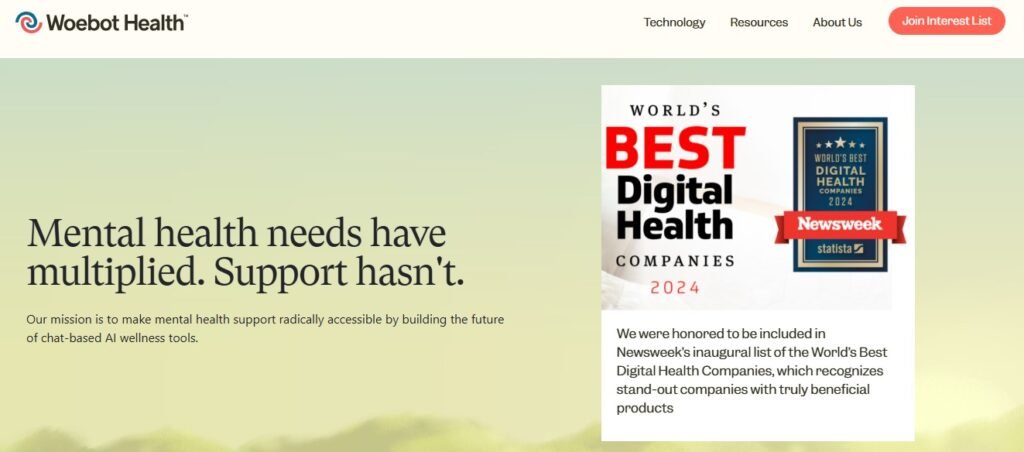
Founded in 2017 by clinical research psychologist Dr. Alison Darcy, Woebot is one of the most research-backed tools in this space for over 1.5 million users and 18 clinical trials to date. Notably, it’s not a generative AI tool. Every response is written by conversational designers trained in CBT, IPT, and DBT, making it more predictable and clinically safer than freeform AI systems with no guardrails. Access is available only through employer benefit plans or healthcare provider pathways, which keeps it squarely in the clinical ecosystem rather than the consumer wellness market.
It’s best suited for between-session CBT support for patients already in a care pathway with a validated, structured complement to clinical work, not a replacement for it.
Worth noting: Woebot recently announced a winddown in consumer operations, citing the pace of AI regulation as a challenge. Its B2B partnerships continue, but the landscape is shifting, and it’s worth keeping an eye on.
Did You Know?
A systematic review of over 3,800 participants found that AI-based conversational agents reduced depression symptoms by 64%, with a meta-analysis of 15 randomized controlled trials confirming the efficacy of AI therapy chatbots
Wysa
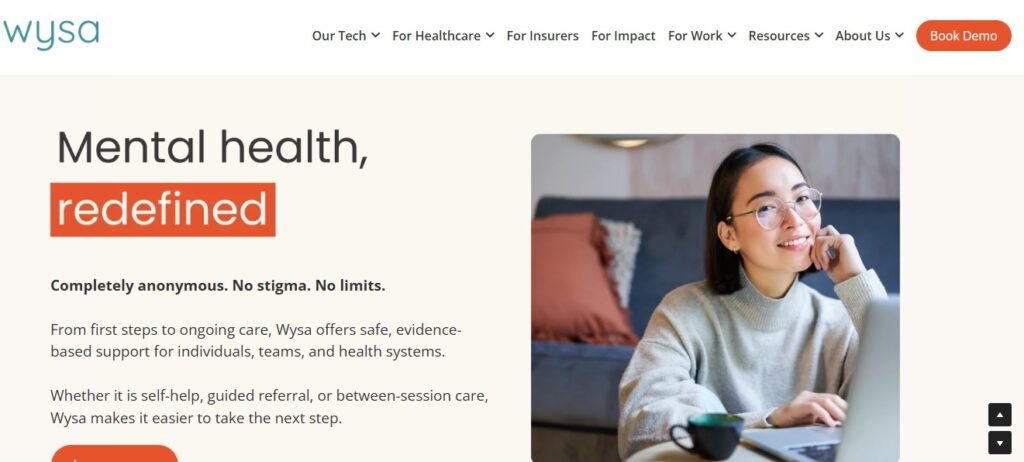
Wysa is a mental wellness companion built around open-ended, emotionally intelligent conversation. Unlike menu-driven tools that only offer preset responses, Wysa understands free-text input and responds with genuine contextual empathy before guiding users toward structured exercises breathing techniques, mood check-ins, journaling, and guided CBT activities. It’s backed by peer-reviewed research and has a strong NHS track record in the UK.
It works best for patients with mild-to-moderate stress or anxiety who want daily support outside of sessions, particularly those who find more rigid, structured chatbots too clinical in feel. Like all tools in this category, it’s not a crisis intervention tool, and it will redirect appropriately when crisis language is detected.
Youper
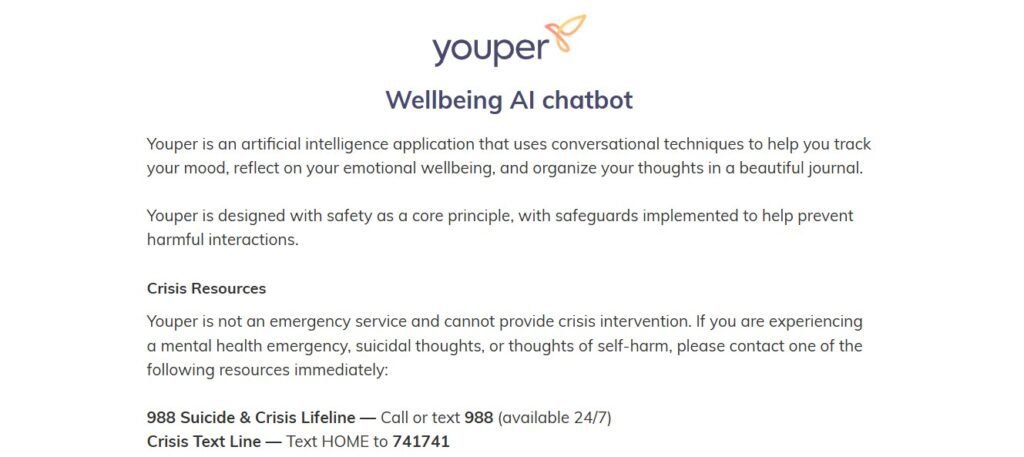
Youper is a self-directed wellbeing chatbot focused on mood tracking, emotional reflection, and journaling. It’s fully AI-powered with no human clinical oversight of individual conversations and is upfront about that. Rather than following a clinical script, it puts users in control of their own emotional exploration, making it feel more like a personal journal than a structured program. It has a documented safety protocol for detecting self-harm language and redirecting users to crisis resources, including the 988 Suicide and Crisis Lifeline.
It’s best suited for stable adult patients (18+) who want a low-barrier tool for daily emotional check-ins not for active clinical care pathways, but as a habit-building companion between sessions. A good recommendation for clients who are doing reasonably well and want a simple, judgment-free space to reflect.
Also Read
Limbic
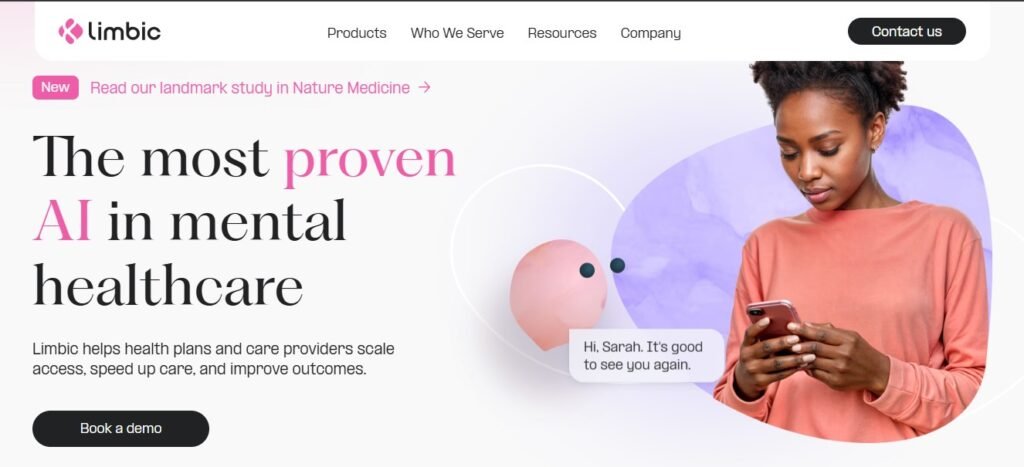
Limbic is the most clinically ambitious tool on this list and arguably the most infrastructure-level. It operates across the full care workflow: an Intake Agent that onboards patients and handles FAQs, a Triage Agent that assesses needs and predicts diagnoses, and a Therapy Agent that delivers CBT with escalation pathways to clinical staff.
It’s the only AI mental health chatbot with Class IIa medical device certification in the UK, and is HIPAA/GDPR-compliant with EHR integration. Real-world outcomes from customers include double the recovery rates, 23% lower dropout, and a 179% increase in nonbinary individuals seeking care (published in Nature Medicine). It’s built for health systems, health plans, and NHS providers, not individual clinicians.
Cass
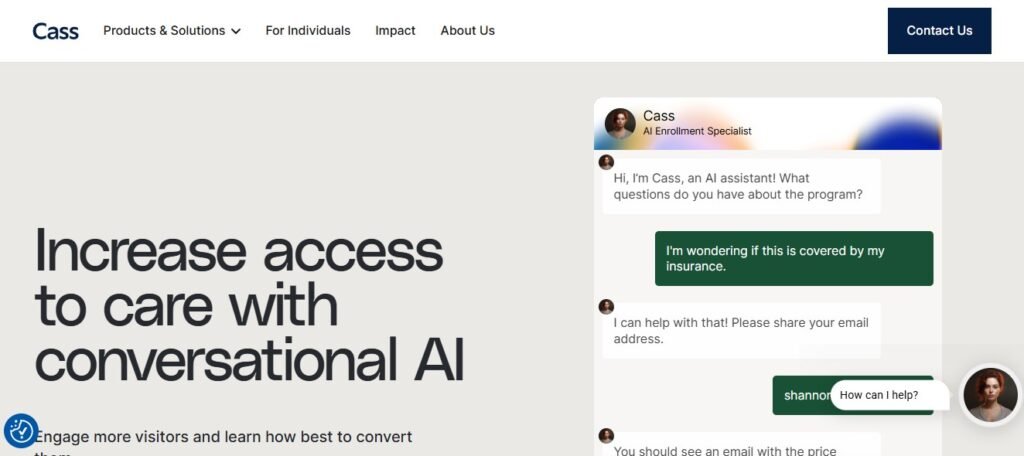
Cass takes a different angle from the others: it’s primarily a patient onboarding and conversion tool. It lives on your clinic or telehealth platform’s website and engages visitors in real time answering questions about insurance, therapy formats, and what to expect, then guiding them through to booking. It’s designed specifically around the emotional and logistical barriers that cause people to drop off before they ever start caring.
It also offers Cass Chat, which provides ad-hoc emotional support to ease the anxiety of signing up, backed by 15 published studies on barriers to entering mental healthcare. Think of it as a growth and intake tool with clinical sensitivity built in not a therapy tool, but a front-door tool that makes it more likely people will walk through. Trusted by organizations like Stanford, Nemours, and several community health networks. Best practices with meaningful website traffic that struggle to convert curious visitors into enrolled patients.
Headspace for Organizations
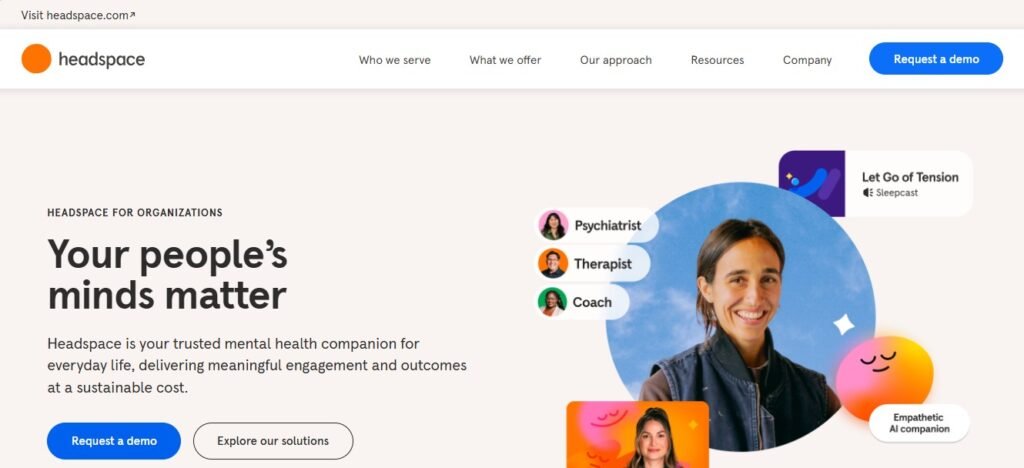
Headspace is the most recognized name here trusted by 4,000+ organizations globally. Its enterprise offering is far more than a meditation app: it’s a full-spectrum mental health platform combining an AI companion (Ebb), coaching, therapy, and psychiatry in one stratified care model.
Ebb acts as the first touchpoint, built by clinical psychologists to listen, reflect, and route members to the right level of care. From there, members can access coaches, licensed therapists, or psychiatrists without leaving the platform. The evidence is solid: 85% of members saw improvement in depression after 6–16 weeks, backed by 68+ peer-reviewed publications. Best for large employers and health plans that want a comprehensive, high-engagement population health benefit.
Did You Know?
The global mental health chatbot market is projected to grow from $1.77 billion in 2025 to $10.16 billion by 2034, at a CAGR of 21.3% reflecting surging demand for accessible digital mental health solutions
How to Evaluate an AI Chatbot for Your Practice
With many AI tools entering the market, careful evaluation is essential before adopting one in a clinical setting. These key questions can help determine whether a chatbot is truly suitable for your practice.
- Clinical evidence base – Look for peer-reviewed research and real-world outcome data, not just marketing claims. Tools like Woebot, Wysa, Limbic, and Headspace have published studies supporting their use. If a vendor cannot point to credible research, that gap is informative.
- Regulatory certifications – Compliance matters. In the US, HIPAA is essential, while GDPR applies to European patients. Certifications such as FDA clearance, CE marking, or UKCA marking signal stronger safety and clinical standards.
- Crisis response protocols – Reputable tools should have clear mechanisms for detecting suicidal ideation or self-harm language and directing users to appropriate crisis resources. If a vendor cannot explain this process clearly, it is a red flag.
- EHR integration – For clinical teams, integration often determines whether a tool is actually used. Confirm which Electronic Health Record (EHR) systems are supported, how data flows between systems, and who owns the patient records.
- Clinical credibility of the team – Tools developed with licensed clinicians and grounded in evidence-based approaches are generally more trustworthy than consumer wellness apps that later expand into clinical environments.
Also Read
Final Thoughts
Mental healthcare is at a turning point. Demand is rising faster than clinical capacity, and traditional models alone are no longer enough. AI chatbots won’t solve this gap by themselves, but the right tools can meaningfully extend what clinicians and care teams are able to do.
The tools highlighted here represent some of the more credible options today clinically grounded and research-backed. Whether you’re a therapist exploring between-session support, a clinic administrator addressing intake bottlenecks, or an organization looking to expand access, the key is simple: identify the problem first, then choose the tool that fits it. The right tool in the right context can make a real difference.
Wondering which AI chatbot is the right fit for your practice? Reach out to us, and we’ll help you evaluate the options and implement a solution that works for your clinicians, your patients, and your workflow.
FAQs
Are AI chatbots safe to use in a clinical mental health setting?
The most reputable tools are built with documented safety protocols, crisis detection, and regulatory compliance, but they should always complement, not replace, clinical oversight.
Can AI chatbots replace a therapist?
No, they’re designed to extend a therapist’s reach, not replace them. Think of them as support tools for between session care, intake, and patient engagement.
How do I know which AI chatbot is right for my practice?
Start with your biggest gap intake bottlenecks, between session support, or patient onboarding, then evaluate tools based on clinical evidence, compliance certifications, and EHR integration.
 Website Modernization Without SEO Loss: Techn...