




Best Practices Behind the Successful Web Applications

Powered by an expert content team, this blog blends SEO precision with compelling storytelling. Every insight is supported by data-driven research, ensuring content that ranks, engages, and drives conversions.

Our authors are proven experts in their fields, writing on topics where they have demonstrated expertise. Every piece of content undergoes peer review and validation by industry professionals.
AI Summary
Key Highlights of Best Practices in React.js Web Applications
This post explores best practices for building successful web applications using React.js, aimed at developers and businesses seeking scalable, high-performance digital solutions. The key insight: leveraging React's component-based architecture and hooks enhances maintainability, performance, and user experience. It covers modular component design, clean code, modern styling, and performance optimization techniques like lazy loading and code splitting. The article cites success stories from Facebook and Airbnb to demonstrate real-world effectiveness. Readers will learn how to implement proven React strategies to create robust, scalable apps that improve client retention and stay competitive in the evolving digital landscape.
As an experienced website development company, we decided to showcase the secrets of creating exceptional web applications with React.js. We understand the significance of crafting robust and user-friendly digital solutions hence, our web app development services are tailored, ensuring seamless user experiences, optimal performance, and scalability.
In this article, let’s explore React.js and the best practices to be followed for deploying a successful web application.
What is React.js?
React.js is an open-source JavaScript library developed and maintained by Meta, designed for building fast, interactive, and scalable user interfaces — especially for single-page applications (SPAs) and modern web apps. It follows a component-based architecture, allowing developers to create reusable, modular UI components that improve maintainability and development speed.
React uses a declarative programming model and an optimized Virtual DOM to efficiently update the UI in response to state and data changes, ensuring high performance even in complex applications. With strong community support, a rich ecosystem, and seamless integration with modern tools like TypeScript, Next.js, and server-side rendering, React remains one of the most popular and powerful frameworks for building modern web experiences.
Why Popular Companies are Utilizing React.js for Their Web Application Development?
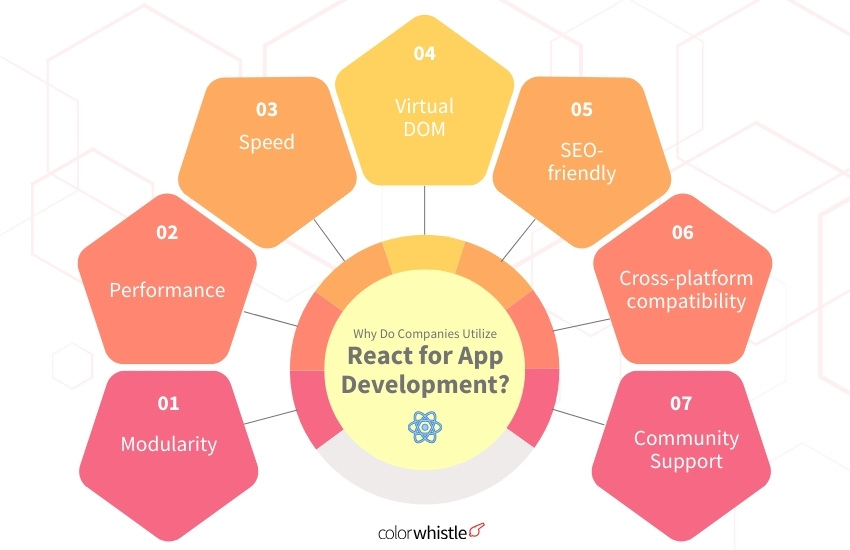
Many popular companies such as Airbnb, Facebook, Instagram, Netflix, Dropbox, and others prefer React.js for developing web applications because of its numerous advantages. React provides a set of building blocks for creating interactive components that developers can reuse throughout an application, thereby promoting code reusability and maintainability. Its implementation of the virtual DOM enhances performance by minimizing the need to re-render the entire page when data changes.
Additionally, React’s component-based architecture allows for modular development, making it easier to scale and maintain applications as they grow in complexity. Frameworks like Next.js enable React to be rendered on the server side, improving SEO performance and reducing initial page load times. React’s efficient rendering process and minimal overhead contribute to faster rendering and better performance of web applications.
Also Read
Best Practices to be Followed While Developing Web Applications Using React.js
Adopt the Power of Small, Reusable Components:
Treat React components like Lego blocks — small, focused, and reusable. Each component should handle a single responsibility, making your UI modular, easier to test, and simpler to maintain. For example, building a standalone button component instead of embedding button logic inside a large navigation component improves scalability and reusability.
Keep Component Ownership Clear:
Each component should manage only the state and logic it truly owns. Lifting state up only when necessary helps maintain a clean and predictable data flow. This improves encapsulation, reduces unintended side effects, and makes debugging significantly easier.
Write Clean, Readable, and Maintainable Code:
Readable code is more valuable than clever code. Follow consistent naming conventions, remove unnecessary complexity, and add comments only when logic isn’t obvious. Combine this with formatting tools like Prettier and linting tools like ESLint to enforce code quality across teams.
Use JSX for Expressive UI Development:
JSX allows you to write HTML-like markup inside JavaScript, making UI code more readable and intuitive. When used properly, JSX improves component clarity and keeps structure and logic closely aligned, enhancing developer productivity.
Use Modern Styling Approaches in React:
Styling React apps is more manageable with scoped and component-based styling solutions, such as:
- Styled Components
- CSS Modules
- Tailwind CSS
- Vanilla Extract
These approaches reduce global CSS conflicts, improve maintainability, and keep styles closely tied to components.
Prefer Functional Components Over Class Components:
Functional components are now the standard in modern React. They are simpler, easier to reuse, and fully compatible with React Hooks. Class components and lifecycle methods are considered legacy in most modern projects.
Leverage React Hooks for State and Logic Management:
React Hooks such as useState, useEffect, useMemo, useCallback, and useContext provide powerful ways to manage state, side effects, and shared logic. Custom hooks further help reuse business logic across components and keep code clean.
Optimize Performance with Modern React Techniques:
Performance should be built in from the start. Use techniques such as:
- Lazy loading with
React.lazy() - Code splitting with dynamic imports
- Memoization (
useMemo,React.memo) - React 18 concurrent features (
useTransition) - Suspense for async rendering
- Bundle optimization via Vite or Next.js
These help improve responsiveness and Core Web Vitals.
Write Tests to Ensure Reliability and Stability:
Testing ensures your application remains stable as it grows. Use modern testing tools such as:
- Jest
- React Testing Library
- Playwright or Cypress for end-to-end testing
Automated tests help prevent regressions, improve confidence in releases, and support long-term scalability.
Also Read
Successful Web Applications with React.js
Many internet giants are successful with React, but let’s explore Facebook, Airbnb, and Dropbox.
Facebook’s Success Story with React for Web Application Development
Facebook’s journey with React for web application development was born out of the need to tackle the growing complexity of its applications while striving for a more efficient development process. React, a JavaScript library crafted by Facebook itself emerged as the game-changer that transformed how the company built web applications.
Why React?
Best Practices Facebook Followed
React brought efficiency to the table with its virtual DOM concept, ensuring the smooth and swift rendering of applications, thus enriching the user experience.
Its use of JSX, a blend of JavaScript and HTML, and simplified component writing, streamlines development efforts.
The server-side rendering capability of React boosted search engine optimization, allowing Google bots to index application content with ease.
- Taking advantage of React’s component-based architecture, Facebook broke down applications into manageable components, facilitating easier iteration and maintenance
- Prioritizing user interface, Facebook leveraged React to create highly responsive interfaces, enriching both user experience and application performance
- Leveraging React’s component reusability, Facebook-optimized code reuse, saves time and effort during development
- With React’s performance-oriented design, Facebook built applications that ran efficiently and smoothly, enhancing overall performance
- By dividing the front-end into smaller UI components, Facebook maintained a modular structure, easing management and scalability
By embracing React and upholding these best practices, Facebook triumphed over development challenges, improved application performance, and elevated user experience, cementing its position as a leader in web application development.
Airbnb’s Success Story with React for Web Application Development
Airbnb turned to React for its web application development to enhance user experience, scalability, and performance. React’s reputation for crafting dynamic and interactive web applications made it the ideal framework to fulfill Airbnb’s evolving requirements.
Why React?
Best Practices Facebook Followed
React’s virtual DOM concept ensured faster loading speeds and smoother interactions, crucial for handling the vast data flow at Airbnb. Its component-based architecture facilitated a scalable structure, while code reusability streamlined development and maintenance efforts effectively.
- Airbnb utilized React’s component reusability to construct a cohesive and consistent user interface, reducing development time and effort.
- Implementation of techniques such as lazy loading and code splitting improved speed and responsiveness, particularly for users with limited bandwidth or slower devices.
- Responsive design principles ensured accessibility and functionality across various devices and screen sizes, catering to the diverse global user base.
- Prioritizing user feedback and conducting extensive testing allowed Airbnb to iterate on web applications, ensuring alignment with customer needs and preferences.
- Implementing robust security measures protected user data and ensured application integrity, adhering to industry best practices and standards.
By incorporating React into its web application development and following these best practices, Airbnb significantly improved user experience, optimized performance, and ensured scalability for its online accommodation marketplace.
Stay Ahead Among Your Competitors
Businesses strive to enhance client retention through top-tier applications in the competitive marketplace. This drive has led many big companies to adopt React apps or integrate React into existing platforms. The shift stems from React’s remarkable benefits.
Despite the investment in framework upgrades, building React apps promises unparalleled user experiences across web and mobile platforms. As a result, businesses recognize the value of embracing React’s efficiency and versatility to stay ahead in the digital arena. In this era of innovation, leveraging React ensures not just staying relevant but thriving in delivering exceptional user-centric solutions.
If you are not sure about the utilization of React.js for your business,
You can contact ColorWhistle by sending us a message or calling us at +1 (919) 234-5140, we’ll get back to you at the earliest. We provide services tailored to your requirements that suit your business. We are also experts at website development services, as well as web designing. You can approach us for any of these services to make a robust online presence for your business.
What’s Next?
Now that you’ve had the chance to explore our blog, it’s time to take the next step and see what opportunities await!
 AI Tools and Technologies for Revolutionizing...