





Travel Aggregator Website: A Complete, Execution-Ready Guide

Powered by an expert content team, this blog blends SEO precision with compelling storytelling. Every insight is supported by data-driven research, ensuring content that ranks, engages, and drives conversions.

Our authors are proven experts in their fields, writing on topics where they have demonstrated expertise. Every piece of content undergoes peer review and validation by industry professionals.
AI Summary
Travel Aggregator Website: A Complete, Execution-Ready Guide
Travel aggregator websites have evolved from simple comparison tools into high-volume, data-driven platforms that influence a large share of global travel bookings. In 2026, building a travel aggregator is no longer about listing the cheapest flights—it’s about handling scale, API reliability, monetization efficiency, and user trust.
With travelers increasingly relying on aggregators to compare flights, hotels, and packages across dozens of providers, this model remains one of the lowest-barrier entry points into the online travel business. Affiliate partnerships, contextual advertising, and commission-based bookings continue to make aggregator platforms commercially attractive—especially when paired with strong UX and performance optimization.
However, success today depends on execution. Aggregator websites must manage real-time data feeds, integrate with multiple travel APIs, and deliver fast, unbiased results across devices. AI-driven pricing signals, predictive availability, and personalization are now shaping user expectations, even for comparison-first platforms.
This guide breaks down what a travel aggregator website is, how leading platforms work, how they make money, and the practical ways to build one—from WordPress-based implementations to fully custom solutions. The focus is not just on getting started, but on choosing an approach that can scale sustainably.
What is a Travel Aggregator Website?
A travel aggregator website searches for travel deals across multiple sources and presents the results in a single interface. Instead of checking individual airline or hotel websites, users can compare prices, availability, and routes in one place.
For example, when searching for a flight from Dubai to New York, an aggregator pulls data from hundreds of airlines and booking platforms simultaneously – allowing users to identify the best option without visiting each source separately.
Aggregator websites typically do not own inventory. They act as intermediaries that surface options and redirect users to booking providers or complete transactions through partner networks.
Also Read
Best Travel Aggregator Website Examples
Studying existing platforms helps clarify what works at scale.
1. Skyscanner

Skyscanner is known for its flexible search options, including:
- Month-wide price views
- “Everywhere” destination searches
- Strong price transparency
Its strength lies in helping users discover cheapest travel opportunities, not just specific routes.
2. Adioso

Adioso focuses on intent-based discovery. Users can search for destinations based on mood, weather, or experiences—making it more exploratory than traditional aggregators.
3. Google Flights
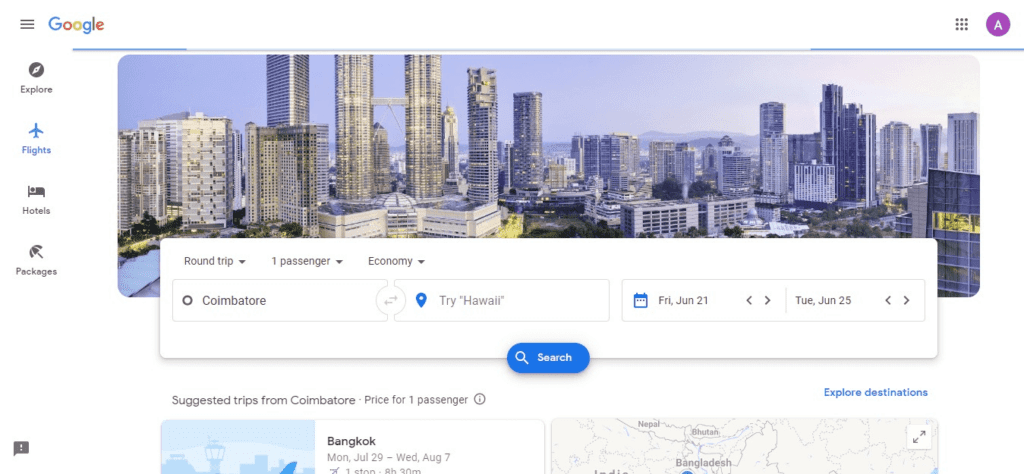
Google Flights combines speed with advanced mapping and fare-tracking capabilities. It often surfaces competitive pricing and is tightly integrated into Google’s broader search ecosystem.
4. Expedia
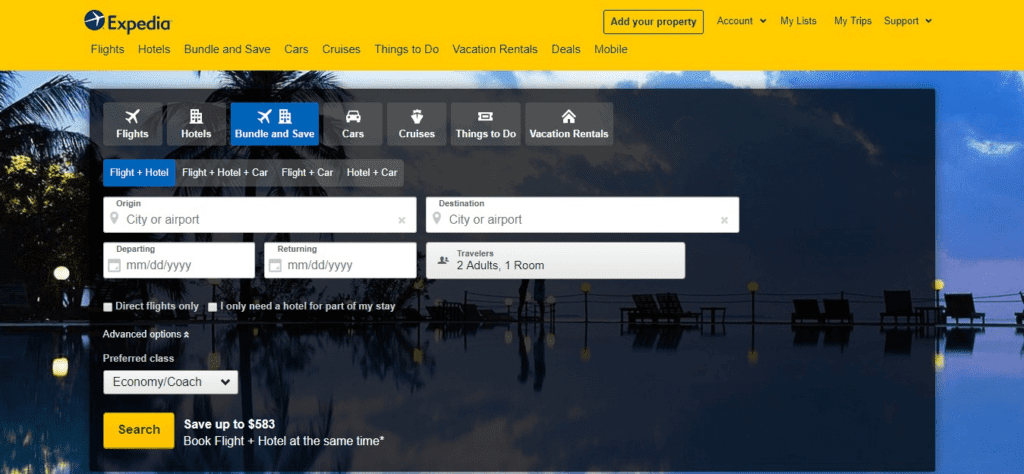
Expedia operates as both an aggregator and an OTA, offering bookings for:
- Flights
- Hotels
- Vacation packages
- Car rentals and cruises
Its strength lies in inventory depth and bundled offerings.
How Do Travel Aggregator Websites Make Money?
Travel aggregators rely on multiple revenue streams, often combined:
1. Affiliate Commissions
When users complete a booking via a partner site, the aggregator earns a commission.
2. Wholesale Margin (Used by OTAs)
Some platforms negotiate discounted bulk inventory and resell it at a higher price.
3. Advertising Models
- Cost-per-click (CPC)
- Cost-per-impression (CPI)
- Sponsored placements
Hotels and OTAs pay for visibility in competitive search results.
How Do Aggregator Websites Source Travel Inventory?
Most aggregator platforms source data through:
Direct Hotel & Airline Contracts
Negotiated inventory offers higher margins but requires scale.
Global Distribution Systems (GDS)
Common GDS platforms include:
- Amadeus
- Sabre
- Travelport (Galileo, Worldspan)
GDS access is typically restricted to licensed travel agencies accredited by ARC or BSP.
Trade-off: Direct sourcing offers higher margins (20–25%), while GDS-based inventory usually yields lower margins (~15%) but broader availability.
Most of the companies source their inventory by directly negotiating with hotels and global distribution systems (GDS) such as Amadeus, Galileo, Sabre and Worldspan.
Note – GDS integration is only available for licensed travel agents that are ARC (Airlines Reporting Corporation) or BSP ( billing and settlement plan) accredited.
Building a Travel Aggregator Website
Building an aggregator requires combining technology, data, and UX. There are several viable approaches:
1. Build From Scratch
The robustness of a web application will be at its best if its build from scratch. This method will give you more room to incorporate your ideas efficiently. The only downside of this method is hiring a travel website development company to create a solution from scratch is definitely going to cost you time and money. However, if you greatly value flexibility, you must take this route.
2. Build with WordPress
WordPress can be used to create any type of website. You can either install plugins available in the WordPress directory or create a custom plugin to give the website additional capabilities. When compared to building a website from scratch, the cost and development time is comparatively less. So in case of WordPress, all you need to build a functional travel website is a readymade theme or custom themes and plugin
Also Read
3. Travel Engines
You can use web scripts or online booking engines to build a travel portal. These scripts will take care of all the key aspects of a travel website. Plus, these scripts also come with features such as booking engine, billing and invoicing system, module-based functions and more to fit your requirements.
Some of the famous online booking engines are:
These reduce development effort but limit customization.
4. Aggregating Data: API vs Web Scraping
Once you have built your travel aggregator website, you have to connect it with the data feeds. It will ensure access to travel data from hotels, flight companies, etc. Some of the popular ways of aggregating data are:
FREE API’s
Leading travel search engines have affiliate programs where they give free access to their APIs. This will solve the common challenges in one shot – data aggregation and revenue generation. Some of the popular affiliate programs are:
WEB SCRAPPING SERVICES
Not every travel website will provide an API. Apart from that, the APIs you get may not have data fields that are necessary for your business. In such situations, you can get help from web crawling services that can be connected to your database to turn unstructured data into structured data. Building your own web crawling setup is not a viable solution, you can rely on service providers like ScrapeHero, Promptcloud, etc.
Caution: Scraping must comply with legal and ethical guidelines.
Decision Guide: Choosing the Right Build Approach
| Goal | Best Approach |
|---|---|
| Fast MVP | WordPress + Affiliate APIs |
| Full Control & Scale | Custom Development |
| Quick Launch with Bookings | Travel Engines |
| Maximum Margins | Direct sourcing + APIs |
Drive Conversions and Boost your Business with Expert Travel Website Development.
These reduce development effort but limit customization.

Start Building a Travel Aggregator Website
Travel remains one of the most competitive and profitable online industry. Aggregator websites succeed when they combine clean UX, reliable data feeds, fast performance, and smart monetization.
The complexity of your build depends on:
- Features you plan to offer
- Data sources you integrate
- Scale you aim to achieve
With the fundamentals covered in this guide, you can choose a path that balances speed, cost, and long-term scalability.
If you are ready to get started or have any questions, feel free to get in touch. No matter a simple or complex project, our team will help you in every step of the way.
Build A Travel Aggregator Website like Expedia?
In quest of the Perfect Travel Tech Solutions Buddy?
Be unrestricted to click the other trendy writes under this title that suits your needs the best!
 How To Embed Live Streaming Video On Your Web...









A fantastic guide on travel aggregator websites.
It’s a great blog. but the drawback here is that it can be very time consuming, as with multiple airlines being showcased, finding a cheaper one can be a tiresome task.
Thank you for publishing in your blog, I have learned of valuable information keep many post blogging like that