




Online Educator Trends and Statistics for 2026

Archana's passion for data analysis, statistics, and content creation makes her well-equipped to write insightful, data-driven blogs that transforms complex data into engaging content, helping readers gain deeper insights and take informed decisions.

Our authors are proven experts in their fields, writing on topics where they have demonstrated expertise. Every piece of content undergoes peer review and validation by industry professionals.
AI Summary
Online Educator Trends and Statistics for 2026
This post explores key online educator trends and statistics shaping digital learning’s rapid growth and rising competition. The key insight: AI-driven personalization and educator branding are transforming teaching methods. It outlines trends like microlearning, mobile-first design, data-driven optimization, and community-led learning, benefiting educators by improving engagement and scalability. Supported by market forecasts projecting eLearning’s surge beyond $842 billion by 2030 and data on AI adoption, digital tool usage, and educator productivity, it guides educators and EdTech professionals to adapt strategies. Next steps include leveraging AI, niche specialization, and entrepreneurial skills to thrive in this expanding market.
The online educator trends and statistics reveal a rapidly expanding and increasingly competitive digital learning landscape. The global eLearning market is projected to surpass hundreds of billions in value, with consistent year-over-year growth driven by demand for flexible, skill-based education.
In this blog, we explore the most important online educator trends and supporting statistics and what they reveal about the next phase of digital education growth.
Key Online Educator Trends for 2026
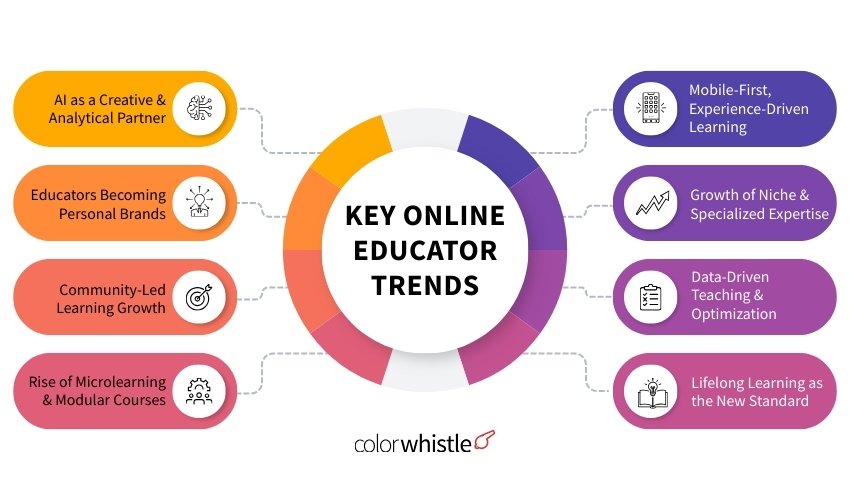
AI Is Becoming a Creative and Analytical Partner
Artificial Intelligence now supports lesson planning, grading, and learner analytics for online educators. It helps identify knowledge gaps and personalize learning paths based on student performance.
The real transformation lies in delivering scalable, data-driven personalization.
Click here to watch the Top 5 AI tools for teachers and online educators transforming digital teaching.
The Rise of the Educator as a Personal Brand
Learners choose educators based on credibility, authenticity, and visibility — not just institutional affiliation.
Educators are building authority through blogs, newsletters, webinars, podcasts, and social platforms, strengthening trust and long-term engagement.
Community-Led Learning Is Replacing Isolated Consumption
Online learning is becoming more interactive and social. While flexibility remains important, learners now expect collaboration and connection.
Educators are designing experiences that encourage peer interaction, accountability, and shared problem-solving.
Also Read
Microlearning and Modular Course Design
Long lectures are becoming less effective in today’s fast-paced digital environment.
Microlearning short, focused modules with clear objectives and interactive checkpoints allows learners to stay engaged and learn in flexible time slots.
Mobile-First and Experience-Driven Learning
With mobile usage dominating digital behavior, courses must be optimized for smaller screens and seamless navigation.
Clean design, intuitive structure, and frictionless user experience directly influence engagement and completion rates.
Hyper-Specialization and Niche Expertise
As competition increases, broad topics struggle to stand out.
Educators are focusing on niche audiences and specific challenges, building stronger trust and clearer positioning in the market.
Data-Driven Teaching and Continuous Optimization
Online educators now rely on analytics such as watch time, drop-off rates, and quiz performance.
Successful instructors continuously refine their content using data insights to improve engagement and learning outcomes.
Also Read
Lifelong Learning as the Default Mindset
Education is now continuous rather than phase-based. Professionals regularly upskill to stay competitive.
This drives demand for practical, career-focused programs and stackable credentials aligned with real-world application.
Click here to watch How can educators engage students online? | QS In Conversation and discover expert strategies for improving online student engagement.
Online Educators Are Becoming Digital Entrepreneurs
The most important trend is that, Online educators are evolving into digital entrepreneurs.
They are no longer just teaching they are:
Building brands
Developing platforms
Managing communities
Running marketing funnels
Leveraging automation
Scaling globally
This transformation requires more than knowledge delivery. It requires strategic web development, marketing expertise, and scalable digital systems.
Global E-Learning Market Growth Statistics
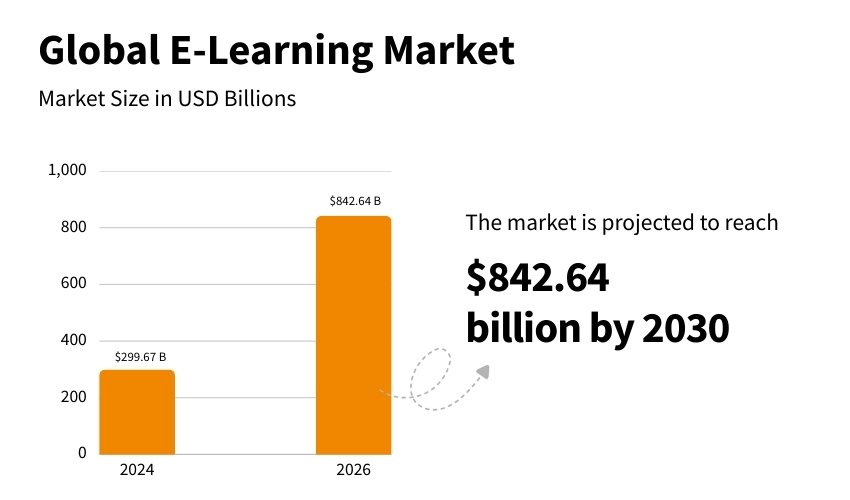
The global e-learning market is experiencing rapid expansion driven by digital transformation and online education adoption. Businesses, educators, and learners are increasingly relying on virtual learning platforms for flexible skill development.
The market is projected to grow from $299.67 billion in 2024 to $842.64 billion by 2030, highlighting massive industry potential. This growth reflects the rising demand for online courses, EdTech platforms, and scalable digital learning solutions worldwide.
Also Read
Interesting Online Educator Statistics for 2026
AI Adoption Among Online Educators
- 6 in 10 K-12 US teachers used AI tools during the school year, reporting productivity gains.

- 60% of educators now use AI in classrooms to enhance engagement and learning outcomes.
- Nearly 60% of teachers use AI for lesson planning and curriculum design, reshaping their workflow.
- 51% of teachers use AI-powered educational games, 43% use adaptive learning platforms and 41% use automated grading systems
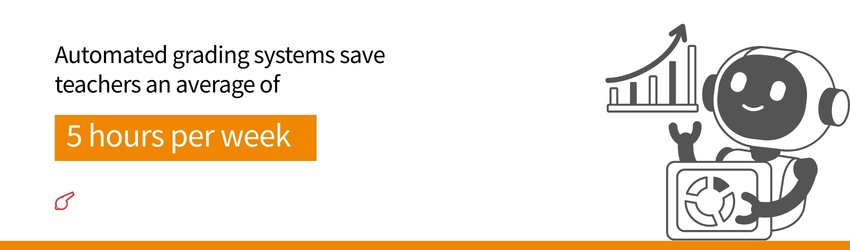
- Automated grading systems save teachers an average of 5 hours per week.
- Despite adoption, only 20% of teachers feel confident using AI tools, and 40% of educators say they need more AI training.
- 60% of educators believe AI will lead to more academic dishonesty
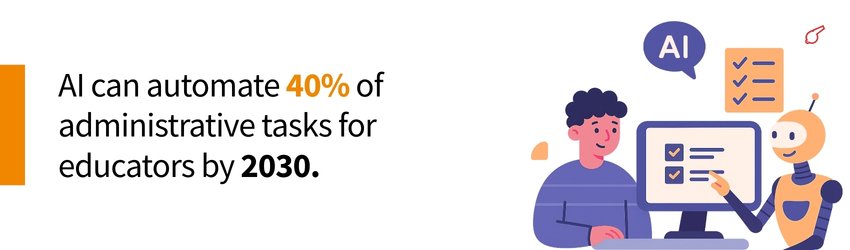
- AI can automate 40% of administrative tasks for educators by 2030
Digital Learning Tools & Virtual Classroom Usage by Educators
- 81.9% of educators report increased use of virtual classroom tools over the past five years.

- 47.1% of educators always use digital tools in online lessons, while 32.8% use them most of the time.
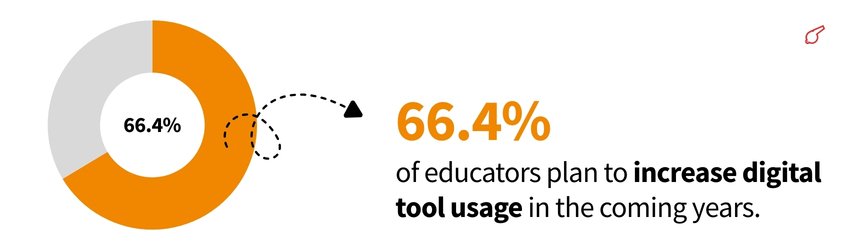
- 66.4% of educators plan to increase digital tool usage in the coming years.
- 72% of K-12 teachers in the U.S. use online tools for instruction, including platforms like Google
- 65% of K-12 teachers use digital tools daily, including educational apps and videos.
- 95% of teachers incorporate technology into lesson planning and delivery.

Online Educator Productivity & Teaching Growth Statistics
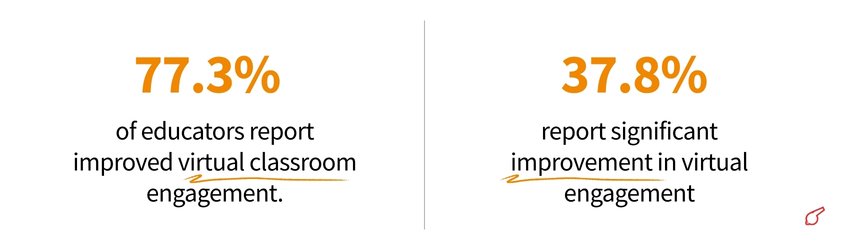
- 77.3% of online educators report improved student engagement in virtual classrooms, with 37.8% noting significant improvement.
- 68.5% of tutoring professionals reported teaching more hours in the past year.
- 56.3% expect to teach even more hours next year.
- 53% of online higher education courses are taught by adjunct or part-time instructors, highlighting the gig-model growth of online teaching.
Also Read
Digital Skills Gap & Training Needs Among Online Educators
- 38% of educators report insufficient digital literacy for online teaching.
- 67% of K-12 teachers want more training on integrating digital tools into instruction.
- 61% of teachers find online grading time-consuming, despite digital tools.
Online Tutoring Market Growth and Future Forecast (2025–2031)
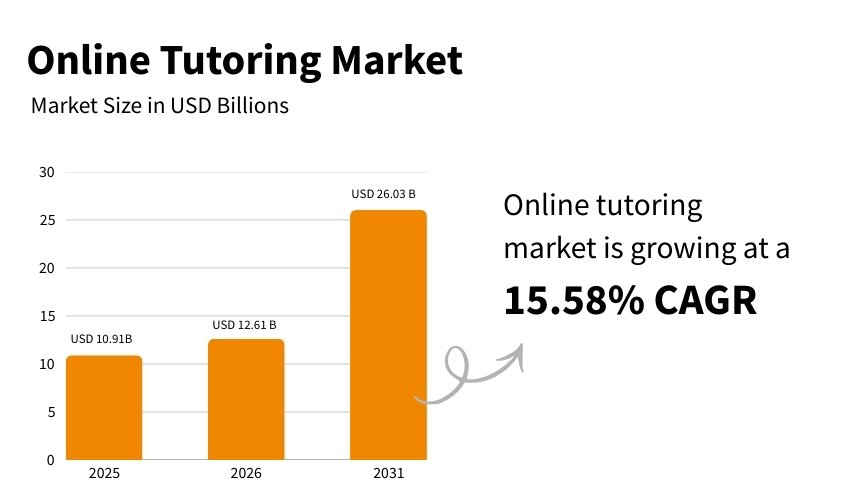
- The online tutoring market is growing rapidly due to rising demand for online education and virtual learning platforms.
- Market size is projected to increase from USD 10.91 billion in 2025 to USD 12.61 billion in 2026.
- It is expected to reach USD 26.03 billion by 2031, showing strong long-term growth.
- The market is expanding at a CAGR of 15.58%, highlighting increasing adoption of e-learning solutions.
- Growth is driven by EdTech platforms, remote learning demand, and personalized online tutoring.
- This trend creates major opportunities for online educators, course creators, and digital education businesses.
Source: AP News | ElectroIQ | WiFiTalents | ZipDo | The Lesson Space | Jobera | Research.com
Wrap Up
The online educator trends and statistics show that the online education industry is rapidly expanding and becoming more competitive. As the global eLearning market grows and more learners choose digital courses, the future of online teaching is increasingly shaped by AI, personalization, microlearning, and community-based learning models.
At ColorWhistle, we help online educators transform ideas into scalable platforms through custom website design for course creators, LMS development and integration, AI and automation setup, SEO-driven content strategy, digital marketing campaigns, and conversion-focused UI/UX design.
If you’re planning to build a website or launch an online learning platform as an online educator, contact ColorWhistle to create a powerful, growth-focused digital presence.
Explore our education institution case studies to see how we’ve helped schools, colleges, and training centers build scalable eLearning platforms, enhance student engagement, and accelerate digital transformation.
 Digitizing NABL Consulting Without Triggering...