



What is GDS? – A Simple, Practical Guide For New Travel Agencies

Powered by an expert content team, this blog blends SEO precision with compelling storytelling. Every insight is supported by data-driven research, ensuring content that ranks, engages, and drives conversions.

Our authors are proven experts in their fields, writing on topics where they have demonstrated expertise. Every piece of content undergoes peer review and validation by industry professionals.
AI Summary
What is GDS? – A Simple, Practical Guide For New Travel Agencies
This serves as a practical guide for new travel agents to understand Global Distribution System (GDS) and its vital role in the travel industry. The key insight: GDS acts as a centralized platform connecting airlines, hotels, and car rentals, enabling real-time bookings and streamlined operations. The blog explains GDS usage, benefits like 24/7 access to inventory, and cost considerations. It targets travel agents managing complex or high-volume bookings, emphasizing GDS’s evolving future amid direct airline bookings. Readers gain clarity on starting with GDS, its advantages, and industry shifts, helping them make informed decisions to boost efficiency and client offerings.
Global Distribution Systems (GDS) continue to play a critical role in the travel industry. In 2026, while travelers increasingly book directly through airline websites and mobile apps, GDS platforms remain essential for corporate travel, complex itineraries, and high-volume bookings.
For new travel agencies, GDS can feel intimidating: expensive systems, certification requirements, and unfamiliar workflows. Yet for the right business model, GDS provides unmatched access to real-time airline, hotel, and car rental inventory, along with pricing transparency that few other channels can replicate
Industry data shows the global GDS market is expected to grow steadily through the decade, driven primarily by corporate travel, international routes, and enterprise booking requirements. At the same time, airlines are rethinking distribution strategies, pushing GDS providers to modernize through API-based access, better analytics, and integration with newer travel platforms.
This guide is written specifically for new and growing travel agencies. It explains:
- What a GDS is (in simple terms)
- How travel companies actually use GDS in day-to-day operations
- The benefits and trade-offs of adopting a GDS
- Whether your agency truly needs one
- What the future of GDS looks like in a changing travel ecosystem
What is GDS?
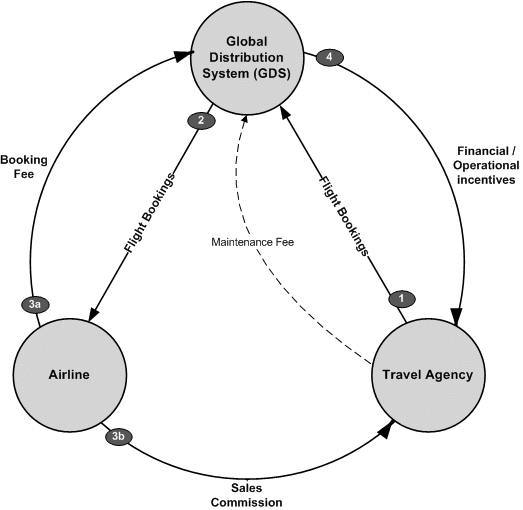
Global Distribution System (GDS) is a computerized network that facilitates transactions between service providers in the travel industry, such as airlines, hotels, car rental companies, and travel agents. It acts as a central platform that enables travel agencies to access real-time inventory, pricing, and availability for various travel services, thereby streamlining the booking process for both agents and customers.
In simple, using GDS, a travel agency can find the availability of hotel rooms, flight seats or cars on behalf of their clients and book through the same GDS.
Did You Know?
According to a Statista report, the global GDS market size is projected to grow from $15.1 billion in 2022 to $18.6 billion by 2029
How Do Travel Companies Use Global Distribution System (GDS)?
Travel companies rely on GDS platforms to deliver accurate, real-time booking solutions for their clients especially when trips involve:
- Multiple airlines
- International routes
- Corporate fare agreements
- Frequent itinerary changes
When a traveler submits a request, the agent:
- Enters travel details into the GDS
- Filters results based on price, route, or preference
- Builds and confirms the itinerary
Most GDS providers charge:
- Transaction-based fees, or
- Annual licensing fees for booking software
Important: Individual travelers cannot directly access GDS platforms. Access is restricted to licensed or affiliated travel agencies.
Also Read
Evolution of Global Distribution System (GDS)
The first GDS platforms emerged in the 1960s, developed by airlines to automate flight scheduling and reservations. These systems became some of the earliest large-scale B2B eCommerce platforms in history.
Over time:
- Airlines opened access to travel agents
- GDS platforms expanded beyond flights
- Hotels, car rentals, and rail services were added
Today, GDS platforms are part of larger travel technology ecosystems, often integrated with:
- Corporate booking tools
- Revenue management systems
- Analytics and reporting platforms
These are some of the major GDS systems in the industry.
| Name of the GDS | Founded in | Founded by | Headquarters | No of employees | Revenue |
|---|---|---|---|---|---|
| Amadeus | 1987 | Air France, Iberia, Lufthansa and SAS | Madrid, Spain | 16,785 | €4.9439 billion (2018) |
| Travelport (Subsidies include - Apollo, Galileo, and Worldspan) | 2001 | Founded through the acquisition of Galileo International by TDS's parent, Cendant Corporation | Langley, Berkshire,UK | Approximately 3,700 | US$ 2.5 billion (2018 |
| Sabre | 1976 | Initially founded by American Airlines. Currently, Sabre is a separate entity owned by AMR Corporation | Southlake, Texas, United States | Around 10,000 | US$3.87 billion (2018) |
Apart from these famous GDS systems, there are other smaller regional GDS systems such as Travelsky, a state-owned company in China and; KIU System, a PSS and GDS used in Latin America.
Did You Know?
The travel-click research data also revealed that GDS integration covered 16.3% of the total $12 billion in revenue generated in the top 50 global markets in the second quarter
What Are the Benefits of Using GDS?
GDS will be the most important channel of distribution for airlines, hotels and car rental companies. Here are some of the major benefits of using Global Distribution System (GDS).
- Effective in attracting international travelers
- 24/7 access to inventory
- Enables business models such as retail travel agency and OTA (Online Travel Agency)
- Offer consumers increased pricing transparency
- Travel agents can get a global platform with a strong market penetration
- Provide best rates to your customers which no other system can provide
- Place travel services to many clients without affecting your marketing budget
Frequently Asked Questions About GDS
1. How can I start using a Global Distribution System (GDS)?
To use a GDS, you have to be a professional travel agent. For that, you must have a proper industry ID such as an ARC (Airlines Reporting Corporation) or IATA (International Air Transport Association) number. Without this number, airline agencies will not know where to send your commission payments. Moreover, airline agencies will not allow unaccredited agents to issue tickets.
If you don’t want to get this certification, you can have a tie-up with an ARC or IATA host company who can book tickets on your behalf.
Some airlines will not allow you to issue tickets even if you have a full IATA license. To be on the safe side, before you sign for the GDS, make sure you talk to the particular airline to ensure if they will deal with you.
2. How much does it cost to use a GDS?
It depends on the specific service you want to use in the GDS. For example, if you want to use Amedeaus’s Flight booking software, they may sell it to you for $150-$160/year (contact the GDS provider to know the exact amount). The software will allow you to reserve tickets on any airlines.
Also Read
3. Do I need a Global Distribution System (GDS)?
If you are a travel agent who falls under the below category, a GDS will be useful for you.
- A corporate travel agent who books on behalf of corporate clients or an individual working at a corporation who needs to book flight tickets for all their employees
- Complex itinerary agents who have steady clients with multiple travel plans
- High volume booking of air-only travel
If you are a leisure agent who doesn’t book air tickets multiple times in a day, you probably don’t need it.
Drive Conversions and Boost your Business with Expert Travel Website Development.

What is the Future of GDS in the Travel Industry?
The traditional role of GDS is changing and being challenged by the changes taking place in the travel industry. Many online travel websites and airlines are pushing and encouraging consumers to make bookings directly via their website. Some airlines are charging additional fees for tickets purchased via the GDS when compared to the pricing in their own website.
Some industry experts predict that GDS can turn into a direct corporate booking tool rather than a booking tool for travel companies.
For example, Southwest Airlines do not work with the GDS Company Worldspan; Sabre is used by American Airlines; PARS by USAir; TravelSky by Air China; and Worldspan by Delta. If you are an agent who uses WorldSpan, you cannot book with Southwest Airlines or you need to look for pricing directly on their website. Another newsworthy information is, agreements signed between airlines and GDS is on a renewal basis. Many in the travel industry are wondering if the airlines will renew their relationship with certain GDSs.
While changes will continue to impact the future growth of GDS, there will definitely be a role for them. Hopefully, they continue to evolve as they did from the old techniques in the 1950s.
We hope that you learned something new about the travel industry. Keep checking our blog section as we plan to further dismantle the ever-changing world of travel.
Do you have any questions? Feel free to reach our travel solution experts at ColorWhistle anytime. We are always happy to help.
In quest of the Perfect Travel Tech Solutions Buddy?
Be unrestricted to click the other trendy writes under this title that suits your needs the best!
 GDS, CRS, OTA, Travel Metasearch Engines - Wh...