


Serper.dev vs Apollo vs Clay: Which Tool Fits Your GTM Stack?

With half a decade of experience in creating tech content for education, healthcare, hospitality, and real estate, Nandhini excels at turning complex insights into clear, credible, in-depth, research-backed, and engaging content that helps readers make informed decisions.

Our authors are proven experts in their fields, writing on topics where they have demonstrated expertise. Every piece of content undergoes peer review and validation by industry professionals.
AI Summary
Key Highlights of Serper.dev Apollo Clay for GTM Stacks
This post explores how Serper.dev, Apollo, and Clay each solve key parts of outbound sales automation, enabling small teams to run efficient prospecting, enrichment, and sequencing without large SDR armies. The key insight: combining these tools creates a flexible GTM stack tailored to budget and technical comfort. Serper.dev offers lightweight Google Search-based enrichment, Apollo provides a vast B2B database and engagement platform, while Clay automates multi-source data enrichment with AI. Readers learn how to build automated workflows that boost cold email reply rates and scale outreach. The article also highlights expert support from ColorWhistle for building and maintaining these GTM workflows.
Outbound is having a real moment again. Not the spray-and-pray version from a few years ago, the newer kind, where a small team can run prospecting, enrichment, and multi-channel sequencing without hiring an army of SDRs to do it by hand. The reason it’s possible now is tooling: a handful of platforms have taken jobs that used to eat a full workday, finding a prospect, finding their email, checking if that email is even real and turned them into a five-minute automation.
Three names come up constantly when teams start wiring together an outbound stack: Serper.dev, Apollo, and Clay. They get compared a lot, but they’re not really competitors in the strict sense, they solve different pieces of the same problem, and the “right” one depends heavily on your budget, your team’s technical comfort, and how much of the workflow you want to own versus rent. This is the breakdown we wish we’d had before building our own GTM tooling stack.
Treat the numbers below as a snapshot, not a permanent fact, always check the current pricing page before you commit budget.
Maximizing cold email reply rates requires more than raw lead counts; partnering with a data-driven digital marketing agency helps unify message design, conversion rate optimization, and multi-channel sequencing.
Why Does Outbound Tool Choice Matter for GTM in 2026?
Outbound tooling wouldn’t be worth this much attention if the underlying numbers weren’t shifting too. A few data points worth knowing before picking a stack:
- Cold email reply rates across B2B outbound in 2026 average around 3.4% platform-wide, with anything above 10% considered elite performance, which is exactly why the enrichment and personalization layer (Serper, Clay) matters as much as the sending layer itself
- Signal-based, personalized cold emails that reference a real buying trigger land noticeably higher reply rates than generic, impersonalized outreach in 2026, often several times higher, which is the core argument for investing in enrichment rather than skipping straight to sending
- Running outbound across more than one channel now meaningfully outperforms single-channel outreach, by a wide enough margin that it’s become the default recommendation for 2026 campaigns, the whole rationale for pairing a data tool with a sequencer rather than picking just one
- On the automation side, automated email flows generate a disproportionate share of email revenue relative to their send volume, a strong case for building the workflow once and letting it run, rather than manually managing outreach lead by lead
The tools below are how most teams are actually building that layer in 2026.
Serper.dev vs Apollo vs Clay: Quick Comparison Table
| Serper.dev | Apollo | Clay | |
|---|---|---|---|
| What it is | Google Search API | All-in-one prospecting + engagement platform | Data orchestration & enrichment workspace |
| Owns its own contact data? | No | Yes (210M+ contacts) | No, pulls from 150+ providers |
| Entry price | ~$1.00/1,000 queries, down to $0.30 at volume | Free tier; paid from ~$49–59/user/mo | Free tier; paid from ~$185/mo |
| Best for | Custom-built, budget-conscious flows | Teams wanting one login, fast setup | Teams doing serious multi-source enrichment |
| Main tradeoff | You build the workflow yourself | Single data source, per-seat cost adds up fast | Real cost often 3-10x the sticker price |
What Is Serper.dev Used for in Outbound Marketing?
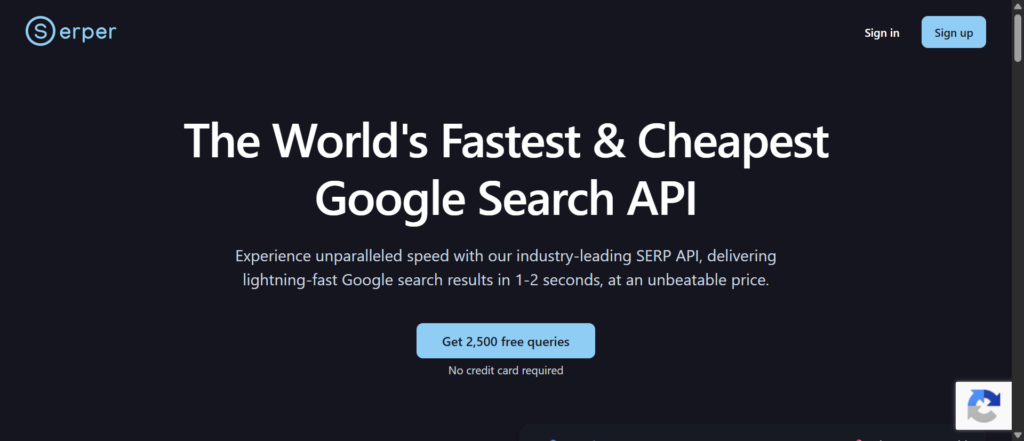
A Google Search API, not a sales tool. It returns Google’s results, organic listings, knowledge panels, news, maps, as structured JSON in 1-2 seconds. In outbound, it’s used as a lightweight enrichment layer: feed it a name + company, get back a LinkedIn URL, an email pattern, or social handles. It’s infrastructure, not a workflow, you build the logic yourself.
Strengths:
- Very affordable – from $1.00 to $0.30 per 1,000 queries, plus 2,500 free queries
- Credit-based API pricing – no expensive monthly seats, just pre-purchased query packages that scale as your volume grows
- Developer-friendly API – integrates easily with custom applications, AI agents, and automation workflows
Limitations:
- Google-focused – designed for Google Search rather than multiple search engines
- Search API only – email discovery, enrichment, and verification require separate tools
- Lean integration ecosystem – fewer native integrations than all-in-one GTM platforms
- Compliance considerations – as with any Google SERP API, review legal and terms-of-service implications for high-volume usage
What Is Apollo Used for in a GTM Stack?
Closer to what most people picture as “a sales tool”, a combined B2B database and sales engagement platform. It includes a database of 210M+ contacts and 30M+ companies, plus prospect search, email sequencing, a dialer, CRM sync, and pipeline management in one platform. The goal is to consolidate multiple outbound sales tools into a single workflow.
Strengths:
- One platform for prospecting, email sequencing, dialing, and CRM sync, less tool switching
- Affordable entry pricing with a free tier; paid plans start at $49/user/month (annual billing)
- Strong native integrations with Salesforce, HubSpot, Outreach, Salesloft, and other sales tools
Limitations:
- Primarily relies on Apollo’s own database, with limited multi-provider enrichment compared to dedicated enrichment platforms
- Per-seat pricing adds up quickly, while the Basic tier starts at $49/user/month (billed annually), most active outbound teams upgrade to the Professional plan ($79/user/mo billed annually or $99/mo billed monthly) to unlock the dialer, A/B testing, and higher credit limits
- Variable credit system makes usage costs harder to predict
- Some advanced integrations, API features, and enrichment capabilities require higher-tier plans
What Is Clay.com and How Does Its Waterfall Enrichment Work?
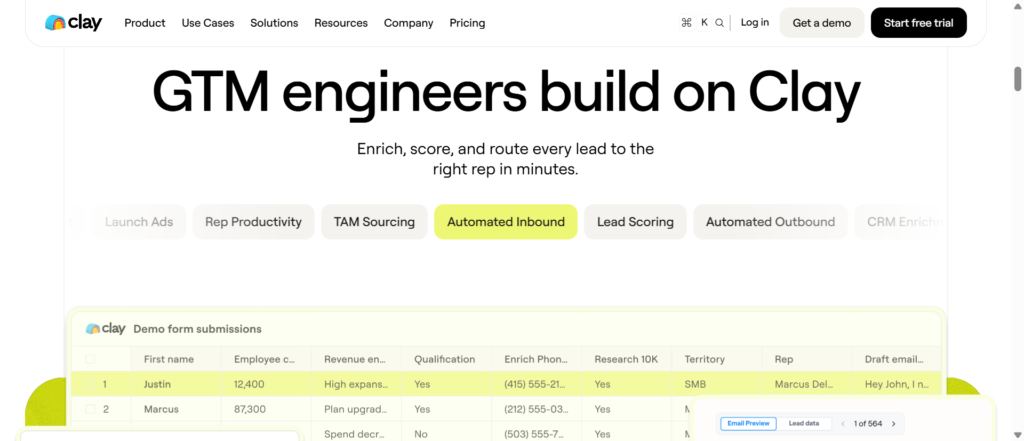
Clay is not a contact database like Apollo. Instead, it’s a workspace that helps you enrich, organize, and automate prospect data. You bring in a list of leads, and Clay pulls additional information from multiple data providers, using the first verified match to improve coverage. It can also use its AI agent, Claygent, to find live information like company news, hiring activity, funding updates, and technology stacks from the web.
In short: Serper finds information from Google Search. Apollo finds and contacts people from its own database. Clay enriches and automates data by combining information from multiple providers and AI.
Strengths:
- Multi-provider waterfall enrichment delivers higher data coverage than relying on a single provider
- Claygent adds live web research beyond static database records
- March 2026 pricing update reduced data enrichment costs by 50–90% for many popular enrichments and eliminated charges for failed lookups
Limitations:
- Usage-based pricing can become expensive for high-volume enrichment workflows
- Steeper learning curve than traditional sales tools; best suited for workflow-driven GTM teams
- Not a standalone contact database, you need a prospect source (e.g., CRM, Sales Navigator, or another provider) before enrichment begins
By leveraging AI research agents and waterfall enrichment inside Clay, growth teams can scale AI workflow automation without sacrificing data accuracy or manually reviewing lead entries.
Can You Use Serper, Apollo, and Clay Together?
Yes. These tools are often used together, with each handling a different part of the outbound sales workflow.
Serper + Scraper + Outreach Tool
Use Serper to gather publicly available information from Google Search, then pass the results to an email verification and outreach tool. This gives you a flexible, low-cost setup, but you’ll need to manage the integrations yourself.
Apollo Standalone
Apollo handles prospecting, contact data, email sequencing, calling, and CRM sync in one platform. It’s easy to get started, though you’re primarily working with Apollo’s own database and ecosystem.
Apollo (or Sales Navigator) + Clay
A common workflow is to source leads from Apollo or LinkedIn Sales Navigator, then use Clay to enrich the data with information from multiple providers and AI before sending prospects to your outreach platform. This improves data quality and coverage.
All Three Together
Many GTM teams combine them into a single workflow:
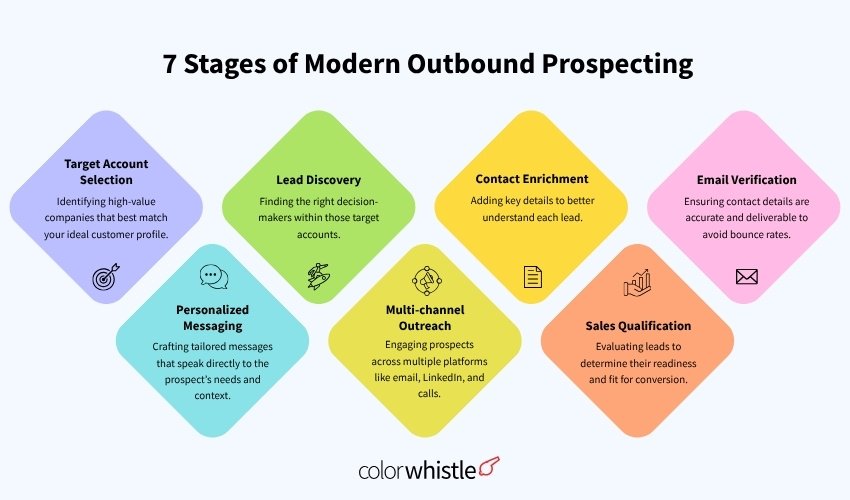
Source leads → Enrich data → Verify contacts → Send outreach
This approach offers the most flexibility, allowing you to replace individual tools as your needs, pricing, or data quality change.
Which Tool Is Best for Your Business Size and Budget?
Bootstrapped or budget-conscious teams building custom workflows
Serper.dev + a custom scraper + an email verification tool. The lowest-cost option, but it requires technical skills to build and maintain the workflow.
Small to mid-sized sales teams that want an all-in-one platform
Apollo. The fastest way to start prospecting, managing contacts, and running outreach from a single platform.
Teams with GTM engineering or RevOps support focused on maximizing data quality
Clay. Best for enriching and automating prospect data at scale. It has a steeper learning curve but delivers greater flexibility and data coverage.
Growing outbound programs
Start with LinkedIn Sales Navigator, a lightweight enrichment tool, and an email verifier to validate your process. As lead volume and workflow complexity grow, add Clay to improve enrichment and automation.
Who Can Help You Build This Outbound Stack? (ColorWhistle)
Picking the right tool combination is only half the job, the other half is building the workflow, connecting it to your CRM, and keeping it running without weekly babysitting.
That’s the kind of build ColorWhistle has been doing for years, across 1,000+ projects, as a white-label web development, digital marketing, and AI automation partner for agencies.
If you’re an agency or growing B2B company that wants an outbound engine without hiring a full RevOps team, ColorWhistle’s digital marketing services and AI consulting and automation practice can:
- Design the sourcing-to-sequencing architecture
- Wire up enrichment and validation tools
- Connect the output cleanly to your existing CRM or sequencer
It’s the same instinct behind ColorWhistle’s white-label partnerships worldwide: come in as an extension of the team.
→ Get a free quote or browse ColorWhistle’s case studies to see how similar engagements were scoped and delivered.
FAQs
What is the difference between Serper.dev, Apollo, and Clay?
Serper.dev is a Google Search API for gathering public data, Apollo is an all-in-one sales intelligence and engagement platform, and Clay is a data enrichment and workflow automation tool that combines information from multiple providers.
What is “Waterfall Enrichment” in Clay, and why is it better than a single database?
Waterfall enrichment sequentially queries multiple data providers (e.g., Clearbit, Hunter, Apollo, Dropcontact). If Provider A doesn’t return a verified email, Clay automatically falls through to Provider B, then C. This boosts email coverage from ~60% (single source) up to 85–95% without manual effort.
Which tool should a bootstrapped or early-stage team pick first?
- For speed & simplicity: Apollo is best if you want a single login to find leads, run email sequences, and sync to your CRM on day one
- For technical/budget-conscious builders: Serper.dev paired with a custom script and verifier offers the lowest pay-as-you-go cost if you have development skills
- For data precision & custom workflows: Clay is best when higher lead quality and personalization outweigh setup speed
 Best Sales Automation Tools We've Tested for ...